 By Emily Parker
Updated November 2026
A diy off-grid water filtration system lets you make safe drinking water from a well, rain catchment, spring or stream without relying on a municipal supply or grid power. The right pick depends on your water source, how much water you need each day, whether you have electricity, and how much maintenance you want to handle. This guide compares seven units based on published specifications, brand reputation and the patterns owners commonly report, with attention to flow rate, filtration stages, power needs and filter replacement. Use it as a shortlist to check against your own water test results.
Our top picks at a glance
- 1
 TOP CHOICEBest overallPurewell Portable Electric RO Water Filter SystemView on Amazon
- 2
 TOP CHOICEBest for gravity-fed setupsPurewell 4-Stage Gravity-Fed Water Filter SystemView on Amazon
- 3
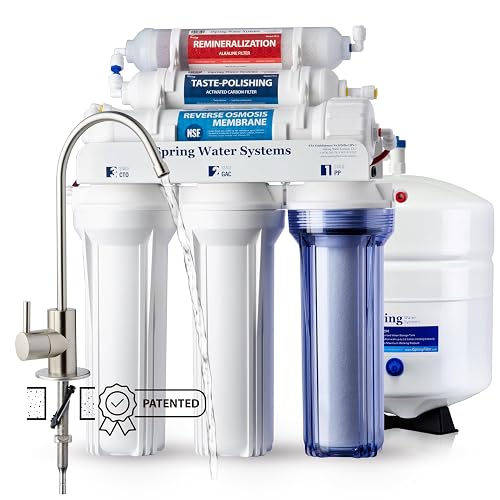 TOP CHOICEBest for high-TDS well wateriSpring RCC7AK-BN Alkaline 6-Stage Reverse Osmosis SystemView on Amazon
- 4
 Best for chlorine and tasteiSpring WGB21B 2-Stage Whole House Water Filtration SystemView on Amazon
- 5
 Best for higher daily volumeWaterdrop T4-A Alkaline Mineral Tankless Reverse Osmosis SystemView on Amazon
- 6
 Best budget pickGeekpure 4 Stage Portable Reverse Osmosis Water Filtration SystemView on Amazon
- 7
 Best for whole-home coverageWhole House Water Filter System, 3 Stage Whole Home Water Softener SystemView on Amazon
Our Top Picks
Quick Comparison
| Product | Best for | Key feature |
|---|---|---|
| Purewell Portable Electric RO Water Filter System | Brackish or high-TDS water, mobile use | 0.0001 micron RO membrane with dual TDS display |
| Purewell 4-Stage Gravity-Fed Water Filter System | Gravity-fed setups with no power | NSF/ANSI certified ceramic filters, washable |
| iSpring RCC7AK-BN Alkaline 6-Stage RO System | Under-sink drinking water, high TDS | 75 GPD RO with pH+ remineralization |
| iSpring WGB21B 2-Stage Whole House Filtration System | Chlorine, odor and taste reduction | Carbon-based filtration, no power needed |
| Waterdrop T4-A Alkaline Mineral Tankless RO System | Higher daily drinking and cooking volume | 450 GPD, 10-stage, 2:1 pure-to-drain ratio |
| Geekpure 4 Stage Portable RO Water Filtration System | Budget-conscious portable RO | 100 GPD with DI filter for low TDS |
| Whole House Water Filter System, 3 Stage Softener | Whole-home water with scale and iron concerns | 3-stage filtration with anti-scale media, 3/4 inch connection |
Purewell Portable Electric RO Water Filter System
0.0001 Micron Reverse Osmosis Water Purifier for Brackish & High TDS Water, Dual TDS Display for Camping, RV, Emergency Prep Purewell Portable Electric RO Water Filter System with UV Light,Remove PFAS
Best for: Brackish or high-TDS water in mobile or emergency settings
This unit suits people who need reverse osmosis in a portable format, such as RV owners, campers, or anyone preparing for emergencies with a limited or uncertain water source. It is also a reasonable choice if you want a TDS reading you can check directly.
Key specs
- 0.0001 micron reverse osmosis membrane (per listing)
- Dual TDS display (per listing)
- UV light stage and PFAS reduction claimed in listing name
- Electric pump, so it needs a power source
Pros
- Handles brackish water better than most gravity or carbon systems
- Portable footprint for RVs, boats and cabins
- TDS display helps you confirm performance over time
Cons
- Electric pump requires battery, inverter or generator power
- RO wastes water in the drain stream, which matters on limited sources
Bottom line: A strong pick if you have power and need RO-level treatment on the move. Check your daily water budget before committing, since RO produces less filtered water than it draws.
Purewell 4-Stage Gravity-Fed Water Filter System
NSF/ANSI Certified to Reduce Lead, Microplastics and Total PFAS, 2 Washable Ceramic Filters, PW-TCA, for Home and Outdoor Use Purewell 4-Stage Gravity-Fed Water Filter System with UltraClean Technolog
Best for: Gravity-fed setups with no electricity
This suits off-grid homes, cabins and emergency kits where you want to filter water by gravity from a rain barrel, tank or pot. It is a good fit if you prefer washable ceramic elements to disposable cartridges.
Key specs
- 4-stage gravity filtration (per listing)
- Two washable ceramic filters (per listing)
- NSF/ANSI certification referenced in listing for lead, microplastics and PFAS (verify the certification for the exact model before relying on it)
Pros
- No power required
- Washable ceramic elements reduce replacement frequency
- Works well for stored rain or surface water after pre-settling
Cons
- Gravity flow is slow, so daily volume is limited compared with pressurized systems
- Ceramic elements need careful cleaning to avoid cracking or clogging
Bottom line: A practical choice for power-free drinking water. Plan for a few hours of filtering per day if you rely on it for all your drinking water.
iSpring RCC7AK-BN Alkaline 6-Stage Reverse Osmosis System
iSpring RCC7AK-BN NSF Certified, 75 GPD, Alkaline 6-Stage Reverse Osmosis System, pH+ Remineralization RO Water Filter System Under Sink Patented Top-Mounted Faucet Design for Easy Installation
Best for: Under-sink drinking water from a well or high-TDS source
This is aimed at homeowners with a pressurized water line who want a fixed under-sink RO system. It suits well water with elevated dissolved solids, provided the supply pressure is adequate.
Key specs
- 75 GPD reverse osmosis capacity (per listing)
- 6-stage design with pH+ remineralization (per listing)
- Top-mounted faucet design for installation (per listing)
Pros
- Fixed installation delivers filtered water on demand
- Remineralization stage can improve taste compared with plain RO water
- Top-mounted faucet simplifies installation for many homeowners
Cons
- Requires a pressurized supply and drain connection, which some off-grid cabins lack
- Under-sink RO produces wastewater and needs periodic membrane and filter changes
Bottom line: Good for a permanent off-grid home with plumbing and pressure. If your water pressure is low, a booster pump may be needed. Consult a licensed plumber for installation questions.
iSpring WGB21B 2-Stage Whole House Water Filtration System
SGS-Tested CTO Filter, Reduces up to 99% Chlorine, Bad Taste, and Odor, 1" inlet/outlet, 10" x 4.5", No power needed iSpring WGB21B 2-Stage Whole House Water Filtration System, 50000 Gallons
Best for: Chlorine, odor and taste reduction at the point of entry
This suits homes that need general improvement of water quality for showers, laundry and drinking, rather than full RO treatment. It is useful after a well or rain system that already has adequate microbial treatment.
Key specs
- 2-stage whole-house filtration (per listing)
- 1-inch inlet and outlet, 10 x 4.5 inch housing (per listing)
- No power required (per listing)
Pros
- No electricity needed
- Improves taste and odor across the whole house
- Standard filter sizes make replacement straightforward
Cons
- Carbon filtration does not remove dissolved salts or most bacteria
- Pressure drop can reduce flow at high demand, depending on your plumbing
Bottom line: A solid pre-treatment or taste-focused choice. Pair it with a disinfection step if your source is surface or rain water.
Waterdrop T4-A Alkaline Mineral Tankless Reverse Osmosis System
NSF/ANSI 372 Certified, 10-Stage, 450 GPD Under-Sink RO Filtration System, 2:1 Pure to Drain, BPA Free, Plug-in required Waterdrop T4-A Alkaline Mineral Tankless Reverse Osmosis System, Dual Flow
Best for: Higher daily drinking and cooking volume under the sink
This suits households that drink and cook with filtered water every day and want a tankless RO unit with more throughput than entry-level models. It also fits people who want mineral reintroduction after RO.
Key specs
- 450 GPD rated capacity (per listing)
- 10-stage filtration (per listing)
- 2:1 pure-to-drain ratio (per listing)
- NSF/ANSI 372 referenced in listing (verify for your unit)
Pros
- Higher capacity than many compact RO units
- Tankless design saves cabinet space
- Mineral stage addresses the flat taste often associated with RO
Cons
- Requires electrical and pressurized water connections
- Drain ratio means noticeable wastewater on a limited well or cistern
Bottom line: Best for an off-grid home with solar or generator power and enough water to support RO drain flow. Confirm your daily power budget first.
Geekpure 4 Stage Portable Reverse Osmosis Water Filtration System
Aquarium RO Drinking Water Purifier- with DI Filter TDS Down to 0 ppm Geekpure 4 Stage Portable Reverse Osmosis Water Filtration System-100 GPD
Best for: A budget portable RO option for low-TDS or occasional use
This suits people who want RO in a compact unit for a cabin, boat, or backup supply and are willing to accept a simpler design. It works best where incoming TDS is moderate.
Key specs
- 100 GPD capacity (per listing)
- 4-stage design including DI filter (per listing)
- TDS down to 0 ppm claimed in listing name
Pros
- Compact and portable
- DI stage can push TDS very low
- Lower entry cost than premium RO systems
Cons
- Needs power and a water source you can connect to
- DI resin is consumed and must be replaced on schedule, which owners often underestimate
Bottom line: A reasonable budget pick for portable RO. Track filter life closely, especially the DI stage.
Whole House Water Filter System, 3 Stage Whole Home Water Softener System
Whole House Water Filter System, 3 Stage Whole Home Water Softener System, Reduces Chlorine, Taste,Iron,Scale,Lead with Heavy Metal and Anti-Scale Filter, Includes 3 Sets Filters (2 Years use), 3/4”
Best for: Whole-home coverage where iron, scale and chlorine are the main concerns
This suits homes with a well or cistern that show scale on fixtures, iron staining or chlorine taste. It targets the whole water supply rather than a single tap.
Key specs
- 3-stage whole-home filtration (per listing)
- 3/4 inch connection (per listing)
- Includes 3 sets of filters, roughly 2 years of use (per listing)
Pros
- Protects plumbing and appliances from scale and iron
- Whole-house treatment supports showers and laundry
- Filter set included for initial use
Cons
- Not a drinking-water purifier on its own; it does not replace RO or disinfection
- Installation requires plumbing work and a suitable bypass
Bottom line: Best as a whole-home base layer on a well system. Pair it with a point-of-use drinking filter for safe drinking water.
Buying Guide
Water source and what you need to remove
Start with a lab water test. Rain catchment usually needs bacteria and protozoa control. Wells often need hardness, iron, nitrate or TDS treatment. Surface water needs the most comprehensive approach. Match the system to what the test shows, not to general claims.
Good picks for this: Purewell Portable Electric RO Water Filter System, Whole House Water Filter System
Flow rate and daily volume
Gravity filters are slow, so calculate how many liters you need per day for drinking and cooking. RO units are rated in gallons per day (GPD), but real output is lower and drain water is extra. Plan for the full daily demand plus a reserve.
Good picks for this: Waterdrop T4-A Alkaline Mineral Tankless Reverse Osmosis System, Purewell 4-Stage Gravity-Fed Water Filter System
Power requirements
Electric pumps and RO units draw power continuously during use. Check the rated wattage and estimate daily watt-hours against your solar or battery bank. Gravity and carbon-only systems avoid this entirely.
Good picks for this: Purewell 4-Stage Gravity-Fed Water Filter System, iSpring WGB21B 2-Stage Whole House Water Filtration System
Water pressure and plumbing fit
Under-sink and whole-house units need adequate pressure and connection sizes. Check your supply pressure with a gauge. Many off-grid systems run at low pressure, which may require a booster pump or a gravity-compatible model.
Good picks for this: iSpring RCC7AK-BN Alkaline 6-Stage Reverse Osmosis System, Whole House Water Filter System
Filter life and replacement cost of ownership
Filter and membrane replacement drives long-term use. Note the stage count, the replacement interval and the availability of cartridges. Washable ceramic elements reduce consumables, while DI and RO membranes need scheduled changes.
Good picks for this: Geekpure 4 Stage Portable Reverse Osmosis Water Filtration System, Purewell 4-Stage Gravity-Fed Water Filter System
Durability and materials
Look for food-grade housings, corrosion-resistant fittings and certified components. Certifications such as NSF/ANSI standards indicate that performance claims were independently evaluated. Verify certifications for the exact model you buy.
Good picks for this: Waterdrop T4-A Alkaline Mineral Tankless Reverse Osmosis System, Purewell 4-Stage Gravity-Fed Water Filter System
Installation and maintenance
Some systems are plug-and-play, while others need drilling, drain lines and electrical work. Factor in time, tools and whether you can perform maintenance yourself. For plumbing and electrical installs, consult a licensed professional.
Good picks for this: iSpring WGB21B 2-Stage Whole House Water Filtration System, Geekpure 4 Stage Portable Reverse Osmosis Water Filtration System
FAQ
Is a DIY off-grid water filtration system safe for drinking?
It can be, but only if it matches your water source. Filters remove sediment, chemicals and some microbes, while disinfection such as UV or boiling may still be needed for surface or rain water. Test your water and verify the system’s certifications before relying on it for drinking.
Do I need electricity for an off-grid filter?
No. Gravity-fed ceramic and carbon systems work without power. RO systems and electric pumps need power, so size your solar or battery supply accordingly.
How much water can a gravity filter produce?
Output depends on the filter element, head height and water temperature. Gravity systems are generally slower than pressurized RO units, so calculate your daily liters needed and compare with the manufacturer’s stated flow.
What is the difference between RO and carbon filtration?
Carbon filters reduce chlorine, taste and odor and some organic compounds. Reverse osmosis removes dissolved salts, many contaminants and most microbes, but it wastes some water and needs more maintenance.
How often do filters need replacing?
It depends on source water quality and daily use. Follow the manufacturer’s replacement schedule and monitor flow rate or TDS readings. Water testing can confirm when replacement is due.
Can I install an off-grid filter myself?
Many gravity and simple inline units are DIY-friendly. Under-sink RO and whole-house systems often need plumbing knowledge, and electrical connections should be handled by a licensed electrician.
Conclusion
For portable, power-available use with tougher water, the Purewell Portable Electric RO Water Filter System is a strong starting point. If you have no power, the Purewell 4-Stage Gravity-Fed Water Filter System offers a practical gravity option. For a fixed under-sink setup on high-TDS well water, consider the iSpring RCC7AK-BN. For taste and chlorine at the whole-house level, the iSpring WGB21B fits well, while the Whole House Water Filter System addresses scale and iron. The Waterdrop T4-A suits higher daily volume, and the Geekpure 4 Stage is a budget portable RO choice. Match your pick to a water test, your daily liter needs and your available power, and consult a professional for installation.
Sources
- Drinking water standards, contaminant limits and well water testing guidance (epa.gov)
- NSF/ANSI standards for drinking water treatment unit performance and certification (nsf.org)
- Guidance on safe drinking water from private wells and emergency water treatment (cdc.gov)
Related reading
- Off-grid Water Filtration System for Home: Step-by-Step Setup Guide (2026)
- Off Grid Water Filtration System: A Step-by-Step Guide for Remote Homes
- Water System Off Grid: A Step-by-Step Guide to Planning Yours
- Top 7 Off Grid Portable Reverse Osmosis Travel Water System Picks for 2026
- Top 5 Off Grid Water Pumping System Picks for Remote Properties
- Off-Grid Water System Diagram: How to Read and Build Yours (Step-by-Step)
About Emily Parker
Emily Parker is part of our editorial team and reviews and edits our solar water systems guides, checking product details against manufacturer specifications and owner feedback.