 By Emily Parker
Updated November 2026
A water system for off grid home use has to do three jobs at once: move water from source to tap, keep it clean enough to drink, and run on power you can actually generate. The picks below are chosen from product listings, manufacturer specifications and patterns in owner feedback, not from hands-on testing. Each one is compared on flow rate, rated head, power draw and whether it covers pumping, storage, filtration or all three.
Our top picks at a glance
- 1
 TOP CHOICEBest overallRover R.O. Off-Grid Portable Reverse Osmosis Travel Water SystemView on Amazon
- 2
 TOP CHOICEBest for camping and emergencies0.01-Micron Water Purification System, Solar/Hand-Crank/USB-C RechargeView on Amazon
- 3
 TOP CHOICEBest for no-power countertop useSertodo Sana Vida Copper Gravity Water Filter SystemView on Amazon
- 4
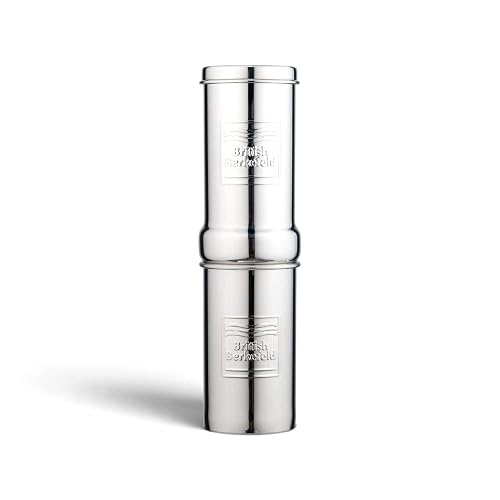 Best for a compact gravity setupBritish Berkefeld Stainless Steel Gravity Water Filter SystemView on Amazon
- 5
 Best for whole-house RO with storageCrystal Quest Whole House Reverse Osmosis Water Filtration SystemView on Amazon
- 6
 Best for pressurized distributionSEAFLO 33 Series Water Pump and Accumulator Tank System – 115V, 3.3 GPView on Amazon
- 7
 Best for rainwater collectionCollection System Downspout, Water Catcher Container with Filter SpigoView on Amazon
Our Top Picks
Quick Comparison
| Product | Best for | Key feature |
|---|---|---|
| Rover R.O. Off-Grid Portable Reverse Osmosis Travel Water System | Overall off-grid drinking water | 200 gallons per day rated output |
| Greeshow 0.01-Micron Portable Electric Water Filter | Camping and emergency kits | Solar, hand-crank and USB-C charging |
| Sertodo Sana Vida Copper Gravity Water Filter System | Countertop use with no power | Gravity-fed, two filter cartridges |
| British Berkefeld Stainless Steel Gravity Water Filter System | Compact gravity filtration | Ultra Sterasyl ceramic cartridges |
| Crystal Quest Whole House Reverse Osmosis Filtration System | Whole-house RO with storage | 220 gallon tank plus pump |
| SEAFLO 33 Series Water Pump and Accumulator Tank System | Steady pressure for home taps | 3.3 GPM at 45 PSI with accumulator |
| Collapsible 50 Gallon Rain Barrel with Filter Spigot | Rainwater catchment | Collapsible storage with overflow kit |
Rover R.O. Off-Grid Portable Reverse Osmosis Travel Water System
Rover R.O. | Off-Grid, Portable Reverse Osmosis Travel Water System (200 Gallons Per Day)
Best for: Overall off-grid drinking water
This suits households that need reliable potable water from questionable sources and can supply modest power for the unit. Its rated output of 200 gallons per day is a useful benchmark for a small household.
Pros
- Reverse osmosis removes a broad range of dissolved contaminants.
- Designed for off-grid operation without a plumbed connection.
Cons
- Output is limited for households that need high daily volume.
0.01-Micron Water Purification System, Solar/Hand-Crank/USB-C Rechargeable Greeshow Portable Electric Water Filter
0.01-Micron Water Purification System, Solar/Hand-Crank/USB-C Rechargeable, 3000mAh Power Bank & LED Light Greeshow Portable Electric Water Filter for Camping & Emergency
Best for: Camping and emergency kits
Best matched to short trips, backup supplies or a go-bag rather than full-time household use. The multiple charging options help when grid power is unavailable.
Pros
- Solar, hand-crank and USB-C charging give several power paths.
- The 0.01-micron rating is fine for bacteria and protozoa removal.
Cons
- Flow rate is too low to serve as a main household supply.
Sertodo Sana Vida Copper Gravity Water Filter System
Hand-Hammered, 2 Filter Cartridges, Filters 500 Gal Each, Stainless Spigot, Copper Drinking Cup, Countertop, 2 Gal Tank Sertodo Sana Vida Copper Gravity Water Filter System | PureFlow Filter Kit
Best for: Countertop use with no power
A good fit for cabins or kitchens where you fill a reservoir by hand and let gravity do the work. Owners often note it is easy to set up without plumbing.
Pros
- No pump or electricity needed.
- Two cartridges with a stated capacity per filter.
Cons
- Requires refilling by hand, so it does not serve showers or laundry.
British Berkefeld Stainless Steel Gravity Water Filter System
Comes With An Ultra Sterasyl Cartridges, Great Tasting Clean Water, No Power Or Plumbing Required, For Home Or Outdoor Use British Berkefeld 0.26 Gal Stainless Steel Gravity Water Filter System
Best for: Compact gravity filtration
For small households or a secondary drinking station. The stainless housing and ceramic-style cartridges are common selling points in owner feedback.
Pros
- Works without power or plumbing.
- Compact footprint for a 0.26 gallon capacity.
Cons
- Small capacity means frequent refilling.
Crystal Quest Whole House Reverse Osmosis Water Filtration System
Crystal Quest Whole House Reverse Osmosis Water Filtration System | 220 Gallon Water Tank + Water Pump | Sediment & Carbon Filter – 200 GPD
Best for: Whole-house RO with storage
For homes that want filtered water at more than one tap and have enough space for a storage tank. Pairing it with a dependable pump matters, because the 200 GPD rating is only useful if the supply side keeps up.
Pros
- The 220 gallon tank buffers daily demand.
- Sediment and carbon stages protect the RO membrane.
Cons
- Large footprint and a more involved installation.
Buying Guide
Water Source and Treatment Needs
Start by identifying where your water comes from. Rainwater, a spring, a well and surface water each carry different contaminants, so a unit built for clean municipal-style water may not be enough for a creek or cistern. Match the filtration stage to the water you actually have, and consider a multi-stage setup if your source is uncertain.
Power Availability
Off-grid living means your power budget is limited. Pumps and reverse osmosis systems draw electricity, while gravity filters and collapsible storage tanks need none. Check the rated voltage and power draw against your solar or battery capacity before you buy, and favor no-power options if your supply is seasonal or small.
Flow Rate and Daily Volume
Think about how much water your household uses each day for drinking, cooking, washing and livestock or garden needs. Gravity filters work well for drinking water but move water slowly, while pump systems and whole-house reverse osmosis setups deliver far more volume. Compare gallons per day and gallons per minute against your real usage.
Storage Capacity and Portability
Storage tanks and rain barrels solve the problem of inconsistent supply, but they need space and a way to fill them. Collapsible tanks save room when not in use and suit temporary or mobile setups, while larger fixed tanks give you a longer reserve for dry periods. Decide whether you need the system to move, stay put, or both.
Filter Replacement and Maintenance
Every filtration system has consumables. Check how often cartridges or membranes need replacing, how easy they are to find, and whether the manufacturer provides a warranty on pumps or core components. Low-maintenance designs are usually the better choice when you are far from a supply store.
FAQ
Do I need electricity to run a water system for an off-grid home?
Not always. Gravity filters and rain collection systems operate without any power, which makes them a practical choice for remote cabins and emergency backup. Pump and reverse osmosis systems do require electricity, so plan your solar or battery capacity around their draw.
How much water can an off-grid system produce each day?
Output varies widely by design. Portable units may produce a modest daily amount, while whole-house reverse osmosis systems are rated for much higher volumes. Check the manufacturer’s stated gallons-per-day figure and compare it with your household’s expected use.
Is rainwater safe to drink with a collection system?
Rainwater usually needs filtration before drinking, since roofs, gutters and containers can introduce debris, bacteria and other contaminants. A collection system with a built-in filter and overflow kit helps reduce sediment, but adding a purification step is advisable for drinking water. Follow local guidance on rainwater use where you live.
What is the difference between a pump system and a gravity filter?
A pump system moves water under pressure and is well suited to running multiple taps or appliances, but it depends on electricity. A gravity filter relies on the pull of gravity to push water through the filter, so it needs no power and works well for drinking water, though at a slower pace.
How often do filter cartridges need replacing?
Replacement schedules depend on the filter type, the quality of your source water and how much you use. Sediment and carbon stages typically wear out sooner than membranes, so check the manufacturer’s recommended interval and keep spare cartridges on hand.
Can I combine several products into one setup?
Yes, many off-grid households pair a storage or collection tank with a pump and a filtration stage. Make sure the components are compatible in pressure, flow rate and fittings, and that your total power draw fits within your energy budget.
Conclusion
If you need drinking water without power, a gravity filter or a collapsible rain collection setup is the simplest path, while a portable reverse osmosis unit suits travel and mobile living. For a full home supply with reliable pressure, a pump and accumulator paired with a whole-house reverse osmosis system is the better match, provided your power budget can support it.
Households with limited space or variable water sources may benefit from combining storage with a compact filter, while those with steady power and larger daily needs should prioritize pumping capacity and filter volume. Matching the system to your water source, power supply and daily use will give you the most dependable result.
Related reading
- Top 5 Off-Grid Grey Water Filtration System Picks for Remote Homes
- Top 5 Off Grid Water System from Air Picks for Remote Homes
- Top 5 Off Grid Waste Water System Picks for Remote Homes and Cabins
- Top 5 Off Grid Drinking Water System Picks Compared for Remote Homes
- Top 5 Homemade Off Grid Water System Picks for Remote Homes
- Off-grid Water Filtration System for Home: Step-by-Step Setup Guide (2026)
- Off Grid Water Filtration System: A Step-by-Step Guide for Remote Homes
About Emily Parker
Emily Parker is part of our editorial team and reviews and edits our solar water systems guides, checking product details against manufacturer specifications and owner feedback.


