By Ethan Brooks
Updated November 2026
The fafco solar bear solar pool heater is a compact, unglazed solar panel built for above-ground pools that want to take the chill off without a large rooftop array. This review is for pool owners with a small to mid-size above-ground pool, limited mounting space, and a pump that can push water through a panel. It is a poor fit for inground pools needing heat to a high set point, anyone wanting a sealed glazed collector, or owners with a very low-flow pump.

FAFCO Baby Bear Solar Panel – Space Saving Universal Above Ground Pool Solar Heater – Easy Installation And Set Up (30 in. x 48 in.)
Product Overview
The listing under review is the FAFCO Baby Bear Solar Panel, a space-saving universal above-ground pool solar heater measuring 30 in. x 48 in. It belongs to FAFCO’s Solar Bear line, a family of polymer-based, unglazed collectors that heat pool water as it passes through a grid of small channels. Unlike glazed flat-plate collectors, there is no glass cover and no insulated backing, which keeps the weight low and the cost of entry modest in terms of components.
The “Baby Bear” name marks it as the smallest panel in the lineup. That size matters: a single 30 x 48 panel has roughly 10 square feet of collector area, so it suits small above-ground pools, spa-sized tubs, or as a supplement to a larger array. For larger pools, FAFCO’s bigger Solar Bear configurations are the better match, which is why the alternatives section below matters.
Solar Bear panels are designed to be installed in series or parallel with the pool’s existing filter circuit, usually after the pump and before the return to the pool. They run on the pool’s own pump, so there is no separate circulator or controller to buy.
Key Features & Specifications
The table below lists only the specifications that the product name and FAFCO’s general Solar Bear documentation support. Confirm exact dimensions and connection sizes against the packaging before ordering.
| Feature | What it means for you |
|---|---|
| Panel size: 30 in. x 48 in. | Roughly 10 sq ft of collector area; small footprint for limited roof or ground space |
| Design: unglazed, polymer collector | No glass to break; lighter than glazed collectors; no insulated backing |
| Installation: universal above-ground fit | Intended for common above-ground pool plumbing setups |
| Operation: pump-driven | Water must be pushed through the panel by your existing filter pump |
| Position: roof or ground mount | Needs unshaded, south-facing exposure in the Northern Hemisphere for best yield |
Pros & Cons
Pros
- Compact size makes it practical for small yards, tight rooftops, and retrofits.
- No glass or metal frame to corrode, and no insulated backing to fail.
- Works directly with your existing pool pump, so no extra controller is required.
- Can be scaled up by adding more panels, which helps you match output to pool size.
- Owners commonly report easy plumbing with standard above-ground pool fittings.
Cons
Performance Analysis
Pool heating performance comes down to three numbers: collector area, flow rate through the panel, and the temperature difference between sunlit water and the pool. For the Baby Bear, collector area is fixed at about 10 square feet, so flow and sun exposure are the variables you control.
As a rough sizing rule, many solar pool guides suggest about 0.5 to 0.75 square feet of collector per square foot of pool surface, depending on climate and desired set point. A small above-ground pool of 12 feet diameter has about 113 square feet of surface, which points to a collector area well above one Baby Bear panel for meaningful heating. In practice, owners of small tubs or spas, or those who just want a few degrees of extension in shoulder season, tend to report the most satisfaction.
Flow matters more than many buyers expect. Unglazed collectors work best at moderate flow, where water spends enough time in the channels to pick up heat without overheating the panel. If your pump is running at a high rate, water may move through too fast to gain much temperature. If the pump is undersized or the run is long, friction loss can reduce flow and starve the panel. Owners frequently report that a properly sized pump and short, straight plumbing made the biggest difference.
Head height also affects output. Mounting the panel high on a roof adds pump load, so check that your pump curve still delivers workable flow at the total dynamic head. A panel mounted at ground level close to the pool usually lowers head and keeps flow stable.
Wind and nighttime heat loss are the main weak points of any unglazed collector. Owners often note that pool temperatures drop back quickly after sunset, so the heater works best when combined with a pool cover. A solid or solar cover reduces evaporation and retains daytime gains, which many users consider essential.
Who Should Buy This Product?
The Baby Bear suits small above-ground pools, hot tubs, and spas that need a modest lift. It is also a reasonable choice for owners who want to test solar heating before committing to a larger array, or who have limited space for panels. Buyers with a dedicated, south-facing unshaded area and a pump that moves at least a moderate flow will get the most out of it.
Skip this product if you want to heat a large pool to a comfortable swimming temperature in cool weather, if you need automatic control, or if your pump is weak. Inground pool owners with significant heat demand will generally need several panels or a larger system. Anyone unsure about electrical, plumbing, or roof loading should consult a licensed pool professional before installing.
Buying Guide
Start with your pool surface area and the temperature gain you want. Multiply length by width for a rectangular pool, or use pi times radius squared for a round pool, then decide how many square feet of collector you need. If the Baby Bear covers only part of your target, plan for additional panels or a larger model.
Check your pump’s flow rate, usually given in gallons per minute at a specified head. Compare it against the panel manufacturer’s recommended range. A pump that is far too slow or too fast will cut performance regardless of panel quality.
Plan your plumbing. Keep runs short, use gentle bends, and include valves so you can isolate the panel for winter or for days when you want to bypass it. Many owners add a check valve to prevent backflow when the pump stops, which connects to the broader question of pool solar safety.
Consider mounting. Ground mounts are easier to service, while roof mounts free up yard space but raise head height and require secure fasteners. Face the panel south in the Northern Hemisphere and avoid shade from trees or nearby structures.
If you are comparing options, these well-known alternatives are worth a look:
- FAFCO Original 4 x 20 Feet Solar Bear Solar Pool Heater: a larger connected-tube configuration aimed at bigger above-ground pools with a starter kit included.
- FAFCO Solar Bear Universal DIY Solar Pool Heater with Starter Kit (3 ft x 9 in x 20 ft): a longer universal layout for owners who want more collector area in a DIY-friendly package.

FAFCO Original 4 x 20 Feet Solar Bear Solar Pool Heater for Above-Ground Pools Universal with Connected Tube Design & Starter Kit
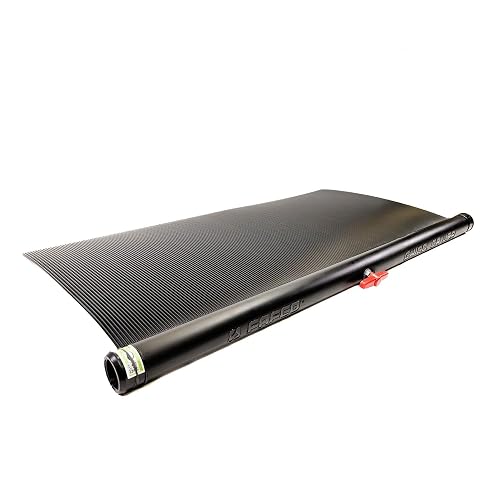
FAFCO – Solar Bear Universal DIY Solar Pool Heater with Starter Kit – High Efficiency Above Ground Swimming Pool Solar Heaters (3 ft x 9 in x 20 ft)
For broader comparisons across panel types and pool sizes, see 5 Best FAFCO Solar Pool Heaters for Every Pool Setup (2026) and Solar Pool Heater Sizing: How Many Panels Does Your Pool Need?. If you plan to install a bypass or check valve, What Is a Solar Pool Heater Vacuum Breaker and Why Does It Matter? explains a key safety component.
FAQ
Can a single fafco solar bear solar pool heater heat an above-ground pool?
A single Baby Bear panel provides about 10 square feet of collector area, which is enough to add modest warmth to a small pool or spa but not to heat a typical 15 to 24 foot above-ground pool substantially. Multiple panels or a larger Solar Bear configuration are usually needed for meaningful gains.
Does the panel need its own pump?
No. Solar Bear panels are designed to run on your existing filter pump. Your pump has to deliver enough flow and head capacity to push water through the collector without starving the system.
Where should I mount the panel?
Mount it in an unshaded spot facing south in the Northern Hemisphere, or north in the Southern Hemisphere. Ground mounts simplify service, while roof mounts need secure fastening and greater pump head.
Do I need a pool cover with a solar heater?
A pool cover is strongly recommended. Unglazed panels lose heat quickly at night and in wind, and a cover retains daytime gains and cuts evaporation.
Is this a good first solar pool heater?
It can be, especially for small pools or as a trial before a larger installation. Be realistic about output and plan your flow and plumbing carefully.
Will it heat my pool on cloudy days?
Solar collectors depend on direct sun, so gains are small or zero on overcast days. Expect the best results on clear, warm days with good flow.
Do I need a permit or professional installer?
Requirements vary by location, so check local codes. If you are unsure about roof loading, electrical connections to the pump, or backflow protection, consult a licensed pool or plumbing professional.
Final Verdict
Is the fafco solar bear solar pool heater worth it?
For small above-ground pools, spas, and owners with limited space, the Baby Bear is a sensible, low-maintenance way to add some solar warmth. Its main limits are small collector area, dependence on pump flow, and heat loss at night, so it works best alongside a pool cover and sized to your pool. Owners with larger pools or higher heat demands should consider the larger Solar Bear configurations.
Related reading
- Xtremepowerus Solar Pool Heater: Setup, Sizing and Common Mistakes
- Top 7 Swimming Pool Solar Water Heater Options Compareds (2026)
About Ethan Brooks
Ethan Brooks is part of our editorial team and reviews and edits our solar water systems guides, checking product details against manufacturer specifications and owner feedback.