By Ethan Brooks
Updated November 2026
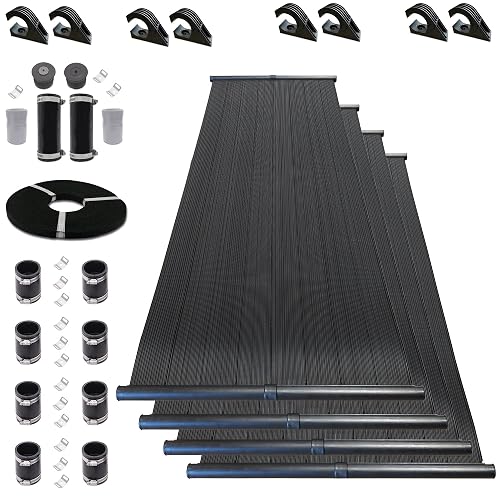
A sungrabber solar pool heater is a flat-panel or mat-style collector that uses sunlight to warm pool water as it passes through the panels on its way back into the pool. In this guide you will learn how the system moves water, how to estimate the panel area your pool needs, how to plumb and control the setup, and which errors most often reduce heating performance. Because the heater is only as good as the water flow behind it, every section below starts from flow rate and head height.
How a Sungrabber Solar Pool Heater Works
Solar pool heaters are unpressurized. Your existing pool pump pulls water from the skimmer and main drain, pushes it through the filter, and then sends it to the collector. The water runs through small channels in the panels, absorbs heat from the sun, and returns to the pool through the return line. There is no separate heating element and no gas or electric burner.
Shopping for one? See our guide: Top 5 Solar Water Pool Heater Options Compared for 2026.
Because the water is not under added pressure, the collector sits at roof or ground level and the pump does all the work. This is why the pump’s flow rate at the collector, measured in gallons per minute (GPM), and the total dynamic head (TDH) it must overcome, decide how much heat you actually get.
Step 1: Confirm Your Pool Pump Can Handle the Collector
Before buying any panel area, check what your current pump can deliver after the filter and heater are included. Most residential pools run a single-speed or variable-speed pump sized for filtration, not for a long, high-lift heater loop.
- Find your pump’s rated flow at the head you expect. The manufacturer’s performance curve shows GPM at different TDH values.
- Measure the vertical lift from the pump to the highest point of the collector, then add the friction loss from pipe length and fittings.
- Compare that TDH against the pump curve. If flow drops below roughly 20 to 30 GPM for a typical residential loop, consider a dedicated booster pump or a variable-speed pump set to a lower speed.
Low flow is the most common reason a solar heater underperforms. Water that moves too slowly through the panels overheats the collector without carrying much heat back to the pool.
Step 2: Size the Collector Area
Pool heaters are usually sized as a percentage of pool surface area. Many installers aim for collector area roughly equal to 50 to 100 percent of the pool surface, with the higher end for cooler climates, shaded pools, or owners who want to extend the swim season. Manufacturers’ sizing tables are the best starting point because they account for collector efficiency and typical sun hours.
| Pool surface area | Typical collector area (season extension) | Notes |
|---|---|---|
| Under 400 sq ft | About 200 to 400 sq ft | Small pools heat quickly but lose heat fast at night |
| 400 to 600 sq ft | About 300 to 500 sq ft | Common residential range |
| Over 600 sq ft | About 400 sq ft and up | May require two loops or a booster pump |
These figures are planning ranges, not guarantees. Climate, cover use, wind exposure and how many hours the pump runs all shift the answer. For a deeper walkthrough, see Solar Pool Heater Sizing Calculator: How Many Panels Do You Need? and Solar Pool Heater Sizing: How Many Panels Does Your Pool Need?.
Step 3: Choose the Mounting Location
Mount the collector where it gets the most direct sun during the hours you use the pool. In the Northern Hemisphere that usually means a south-facing roof or ground rack. A tilt angle close to your latitude works well for year-round use, while a steeper angle favors shoulder-season heating.
- Avoid shade from trees, chimneys and neighboring structures between roughly 10 a.m. and 4 p.m.
- Keep the collector as close to the pool as practical to limit pipe run and friction loss.
- Place the highest point of the collector no more than the pump can lift. Check the TDH from Step 1.
- Allow for expansion and drainage slope. Lines should drain back toward the pool or a drain-down valve.
For roof installs, an existing guide on Roof Mount Solar Pool Heater: Step-by-Step Sizing, Setup and Tips (2026) covers attachment and roof load considerations.
Step 4: Plumb the System
A correct plumbing layout lets water enter the collector at the bottom, flow up through the panels, and exit at the top toward the return. Most residential kits use a diverter valve or motorized valve to switch between filtering and heating.
Key plumbing components
- Diverter or three-way valve: sends water to the collector when the sensor says the pool is cooler than the setpoint.
- Check valve: prevents reverse flow and drain-back into the pump when the pump stops.
- Vacuum breaker: lets air in so the collector can drain down when the pump shuts off. See What Is a Solar Pool Heater Vacuum Breaker and Why Does It Matter? for why this matters.
- Temperature sensor: placed on the collector outlet or pool return, depending on the control design.
Drain-down and freeze protection
In freezing climates, the collector must drain completely when the pump stops. Trapped water expands and can crack panels or fittings. Use a drain-down valve or confirm the slope and vacuum breaker drain the lines fully. In warm climates this is less critical, but a drained collector still avoids stagnation damage on hot days.
Step 5: Set Up Controls and Timing
Automatic controls protect the pool and the collector. A simple thermostat-style controller turns the diverter on when the collector is warmer than the pool by a set amount and returns water to filtration when it is not. Some systems also include a freeze sensor and a pool-temperature cutoff.
- Set the pool temperature target. Many owners start between 80 and 84°F for comfort.
- Set the differential, usually a few degrees, so the diverter does not chatter on and off.
- Run the pump during peak sun hours. Pumping at night wastes energy because the collector cools the water.
- Confirm the system switches back to bypass when the pool reaches setpoint.
Common Mistakes
- Undersized pump or piping. Low flow means the collector overheats and delivers little heat. Verify GPM at the collector, not just at the pump label.
- Too little collector area. Adding a few panels rarely fixes a pool that loses heat quickly. Calculate area first.
- Missing or blocked vacuum breaker. Without it, the collector may not drain, causing freeze damage or pump air-lock.
- Poor slope. Level or back-sloped pipe traps air and water, causing noise and uneven flow.
- Running the pump at night. The collector pulls heat out of the pool once the sun is down.
- Skipping the cover. A solar blanket cuts evaporation and heat loss, often improving results more than extra panels.
- Ignoring shade. Even partial shade across a panel can reduce output noticeably.
Tips for Better Heating
- Use a pool cover whenever the pool is not in use. Owners often report it is the single biggest gain in water temperature.
- Keep the filter clean. Restricted flow lowers collector output.
- Check the diverter and sensor each season. Stuck valves are a frequent cause of “no heat” calls.
- Consider a variable-speed pump run at lower speed during heating hours to increase run time while still moving enough water.
- Inspect panels for leaks, cracked headers and debris after storms.
FAQ
Does a sungrabber solar pool heater need a separate pump?
Often no. Many systems use the existing pool pump. A separate booster pump is useful when head height or pipe length reduces flow below what the collector needs.
How much area do I need for an above-ground pool?
Many above-ground owners plan roughly 50 to 100 percent of pool surface area, adjusted for climate and cover use. Manufacturer sizing charts give the most reliable numbers for your model.
Can I install it on a flat roof?
Yes, with a tilt rack or ballasted mount. Confirm structural capacity and wind rating before installing.
Why is my pool not warming up?
Common causes include low pump flow, insufficient collector area, shading, no pool cover, a stuck diverter or an incorrect controller setpoint. Check flow and valve operation first.
Should I run the pump all day?
Run it during sunny hours when the collector is warmer than the pool. Running it overnight usually cools the water.
Do I need to drain the system in winter?
In freezing climates, yes. Use a drain-down valve or confirm the vacuum breaker and slope drain all lines fully.
Is a professional installation necessary?
Many owners install simple systems themselves, but roof work, gas or electrical tie-ins and structural mounts should be handled by a qualified professional.
Conclusion
A sungrabber solar pool heater performs best when flow, collector area and mounting are planned together. Confirm your pump can deliver enough GPM through the head height and piping, size the collector against pool area and climate, and plumb the system with a working vacuum breaker and proper slope. Pair the setup with a good cover and sensible controls, and the system will extend your swim season considerably.
Related reading
- Xtremepowerus Solar Pool Heater: Setup, Sizing and Common Mistakes
- Top 7 Swimming Pool Solar Water Heater Options Compared (2026)
Ready to choose one?
About Ethan Brooks
Ethan Brooks is part of our editorial team and reviews and edits our solar water systems guides, checking product details against manufacturer specifications and owner feedback.