By Ethan Brooks
Updated November 2026
The Goplus solar dome swimming pool heater is a low-cost, portable way to take the chill off an above-ground or inground pool without wiring, gas lines or a pump upgrade. It suits owners with a small to mid-sized pool who want a few extra degrees during spring and early fall and can accept modest warming. It is less suited to anyone expecting to heat a large pool to a comfortable swimming temperature in a cool climate, or to someone who needs a heater that runs after dark or in heavy overcast weather. Read on for the specs, the trade-offs and how to decide whether this dome-style unit fits your pool.

Goplus Solar Dome Swimming Pool Heater Above Ground, Inground Pool Warmer Equipment w/Hose Connector for Home Outdoor
Product Overview
This is a passive solar pool heater built around a dome-shaped housing that sits on top of a dark heating coil. Water is pulled from the pool through a hose, routed through the coil where the sun warms it, and returned to the pool. There is no electrical element and no circulation-driven heating beyond what your existing filter pump already moves. The listing identifies it as suitable for both above-ground and inground pools, with a hose connector intended for standard garden-hose-style fittings.
The concept is simple, but performance depends heavily on how the unit is connected and on conditions you cannot control. A dome heater does not add energy the way a gas or heat-pump heater does. It only captures what the sun provides, and it works best when the water is moving slowly through a dark surface in strong, direct sunlight. If you are new to solar pool heating, the overview in our guide on how solar pool heater domes work, sizing and setup steps is a useful primer before you commit.
The Goplus name is widely used across a range of outdoor and garden equipment, and this model is one of several dome-style pool heaters sold under that brand. The listing name is the most reliable source for what this exact unit includes, so verify the contents on the product page before you order.
Key Features & Specifications
The table below lists only the specifications that the product name and typical listing details support. Confirm exact dimensions, weight and included parts on the Amazon page, since listings can change between versions.
| Feature | What it means for you |
|---|---|
| Design type | Dome-shaped solar collector, passive (no electrical heating element) |
| Pool compatibility | Listed for above-ground and inground pools |
| Hose connector | Included hose connector for garden-hose-style fittings |
| Power source | Solar only; no plug-in power needed |
| Installation | Connects inline with your existing pump and filter return line |
| Intended use | Supplemental warming for shoulder seasons and sunny days |
Because the heater is passive, its output is tied to flow rate. Manufacturers of this type of unit generally recommend running your pump at a flow that moves enough water through the coil to matter, but not so fast that the water passes through without absorbing much heat. Check the flow rate your pump delivers in gallons per minute, then compare it with any flow guidance printed in the manual that ships with the heater.
Pros & Cons
Pros
- No electrical hookup or gas line required, which simplifies placement near the pool.
- Works with both above-ground and inground pools, according to the listing.
- Hose-based connection makes it relatively quick to attach to an existing pump setup.
- A budget-friendly option compared with heat pumps or gas heaters.
- Zero running cost beyond the pump you already operate.
Cons
- Output depends entirely on sunlight, so cloudy days and cool nights bring little or no heating.
- Passive heating is modest; expect a few degrees of gain, not a warm swimming temperature.
- Flow rate must be balanced carefully, which takes trial and error.
- Water passing through the coil can add to pump wear if the setup is not sized correctly.
- Connection fittings may need adapters depending on your existing plumbing.
Performance Analysis
Performance for any passive dome heater comes down to three variables: solar input, water flow and pool volume. Solar input is the sunlight hitting the dark coil, which is strongest in midday summer months and weakest in winter or on overcast days. Water flow determines how long each portion of pool water spends in the coil. Pool volume sets how much total energy is needed to move the average temperature, which is why a small pool sees a more noticeable change than a large one with the same heater.
Owners of this style of heater often report that the most noticeable gains happen on clear, warm days in spring and early fall, when the pool is already close to a comfortable temperature. Reports of dramatic heating are less common, and most users treat the unit as a supplement that extends the swimming season by a few weeks rather than a replacement for a full-capacity heater. Gains are usually described in terms of a few degrees over a day of good sun, not a rapid rise in a single afternoon.
Reports about setup are more varied. Some owners mention that the hose connections require a bit of fitting work, and that the first attempt at balancing flow took several adjustments. Others note that water temperature at the return can feel noticeably warmer than the pool on sunny afternoons, which is the expected behavior of a working solar collector. Overall, the pattern in owner feedback points to a product that does what passive solar heating does, and that performs best when expectations match physics.
For a deeper look at how flow and sizing interact with heat gain, our article on solar pool heater dome sizing and the broader guide to solar powered in ground pool heater steps, sizing and setup cover the calculations and setup order in more detail.
Who Should Buy This Product?
This heater makes sense for a homeowner with a small or mid-sized above-ground or inground pool who wants a low-cost way to add a few degrees during the shoulder seasons. It also fits someone who already has a working filter pump, a sunny yard and a willingness to adjust flow occasionally. Families who use the pool mainly on warm weekends, and who are happy to skip swimming on cold or cloudy days, will probably find it useful.
You should skip this product if you need reliable heating in cool or cloudy climates, want the pool warm after dark, or plan to swim in cold water regularly. Owners of large pools will also find the heating effect too small to be worth the setup effort. In those cases, a gas, electric or heat-pump heater, or a larger multi-panel solar system, is a better fit. Our roundup of top 7 solar pool heaters for inground pool options compared and the top 5 above ground solar pool heaters for every setup list can help you weigh those alternatives.
Buying Guide
Before you buy any passive solar pool heater, work through a short checklist. First, measure your pool volume in gallons so you can estimate how much heating a given unit can realistically deliver. Second, check your pump’s flow rate and confirm it is within the range the heater manufacturer recommends. Third, look at your plumbing: note the diameter of your return line and whether you need adapters. Fourth, identify your sunniest, most shaded-free spot for the unit, ideally on a flat surface that faces the sun for most of the day.
Next, compare alternatives that serve similar buyers. Passive dome heaters vary in coil size, housing material and included fittings, so reading listings side by side is worthwhile.
-

DORTALA Solar Pool Heater, Dome Swimming Pool Water Heater for Above Ground & Inground Pool with Black Heating Coil, Foldable Legs, Rotatable Hose Connector
— A dome-style solar pool heater for above-ground and inground pools with a black heating coil, foldable legs and a rotatable hose connector. The foldable legs help with placement on uneven ground. View on Amazon
-
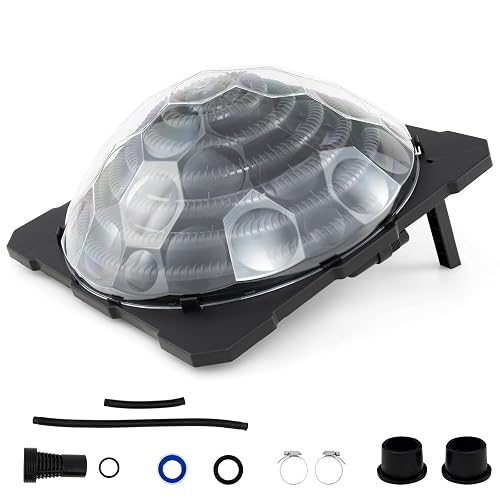
Goplus Solar Pool Heater Above Ground, Inground Swimming Pool Dorm Heater with Rotatable Hose Connectors and Foldable Legs, Solar Powered Water Heating
— A Goplus solar pool heater for above-ground and inground pools with rotatable hose connectors and foldable legs. It is a sibling model in the same brand family, useful if you want to compare fittings and leg design directly. View on Amazon
When comparing, focus on connector compatibility, the orientation options for the hose, and whether the legs or base let you angle the unit toward the sun. For more setup guidance across models, the article on solar pool heater dome: how it works, sizing and setup steps and the step-by-step on a homemade solar heater for swimming pool are worth a read.
FAQ
Will a Goplus solar dome heater warm my pool to swimming temperature?
It can add a few degrees on sunny days, but most owners treat it as a supplement rather than a full heater. Results depend on pool size, flow rate, weather and climate. Expect gradual gains rather than rapid warming.
Does it work with both above-ground and inground pools?
The listing indicates compatibility with both pool types. The connection method is the same in either case: the heater is plumbed inline with your existing pump and filter return.
Do I need an electrical outlet to run it?
No. The heater is passive and uses solar energy only. Your existing pool pump provides the water flow, so the only electricity involved is whatever your pump already uses.
How should I set the water flow?
Slower flow generally gives the water more time in the coil, which increases heat gain, but flow that is too slow can strain your pump. Check your pump’s rated flow, consult the heater manual for recommended ranges and adjust with a valve if your setup includes one.
Will it work on cloudy or cool days?
Output drops significantly in overcast conditions and at night. Passive dome heaters depend on direct sunlight, so expect little or no gain during cloudy spells.
Can I install it myself?
Many owners connect these units themselves using hose and fittings. If your plumbing is complicated or you are unsure about pressure, pump compatibility or fitting sizes, consult a pool professional before installing.
How do I keep it from damaging my pump?
Avoid restricting flow so much that the pump runs against excessive resistance, and keep an eye on pressure gauges. If you notice unusual pump noise or heat, reduce restriction or consult a pool service technician.
Is it worth buying compared with a larger solar system?
For a small pool in a warm, sunny region, a dome heater can be a sensible low-cost addition. For larger pools or cooler climates, a multi-panel solar system or a conventional heater will usually deliver more consistent results.
Final Verdict
The Goplus solar dome swimming pool heater is a reasonable choice for owners who want a passive, low-cost way to add a few degrees to a small or mid-sized pool during sunny weather. Its strengths are simplicity, no electrical requirement and easy inline connection. Its limits are equally clear: heating depends on sun, flow and pool size, and it will not turn a cool pool into a warm one. If your expectations match what passive solar physics can deliver, it is worth considering. If you need dependable heat on cloudy days or in a large pool, look at the alternatives above instead.
Related reading
- 6 Best Solar Dome Swimming Pool Heater Options Compared (2026)
- Top 7 Swimming Pool Solar Water Heater Options Compared (2026)
- Solar Pool Heater Dome: How It Works, Sizing and Setup Steps
- Homemade Solar Heater for Swimming Pool: A Step-by-Step Guide
- 7 Best Solar Powered Swimming Pool Heater Options for 2026
About Ethan Brooks
Ethan Brooks is part of our editorial team and reviews and edits our solar water systems guides, checking product details against manufacturer specifications and owner feedback.