By Ethan Brooks
Updated November 2026
A solar pool heater works by pulling pool water through a set of collectors, letting the sun warm it as it moves through thin plastic tubes, and sending the warmed water back to the pool. In this guide you will learn how does solar pool heater work from start to finish: the water path, the role of the pump and controls, how flow rate and head height affect heat output, and what to check before you buy or set one up. The short version is simple, but the details determine whether your pool actually gets warmer.
The Basic Principle: Sunlight Into Moving Water
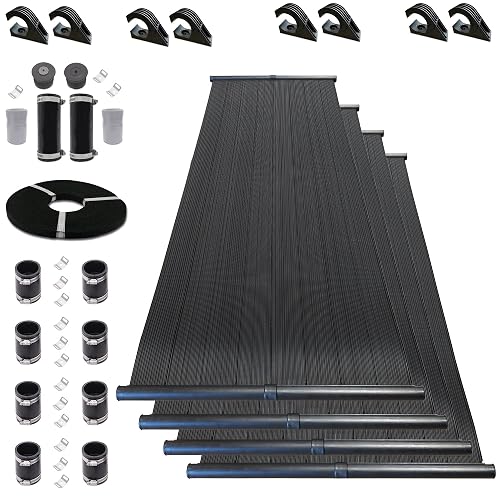
Most residential solar pool heaters are unglazed. They have no glass, no insulated box, and no fancy heat exchanger. The collectors are usually black polypropylene or EPDM rubber panels with a grid of small channels. Black absorbs sunlight well, and the thin walls let heat pass quickly into the water flowing inside. The entire system depends on one idea: water that spends enough time in a sunlit collector absorbs heat, and that warmed water replaces cooler water in the pool.
Shopping for one? See our guide: Top 5 Solar Water Pool Heater Options Compared for 2026.
Because there is no insulation, the collectors lose heat to cool air and wind. That is why solar pool heaters work best in warm weather and why they are normally used as a heater for swimming-season temperatures rather than a year-round system. The goal is to add a few degrees each day, not to bring water from cold to hot in an hour.
Step-by-Step: How the Water Moves Through the System
Understanding the water path makes everything else easier to troubleshoot. Here is what happens in a typical direct-circulation setup:
- Water leaves the pool. The existing pool pump draws water from the skimmer or main drain and pushes it through the filter.
- Water is diverted to the solar collectors. A diverter valve, or a motorized valve on an automated controller, sends filtered water up to the roof or rack where the collectors are mounted.
- Water flows through the collector channels. It travels down or across the collector grid, picking up heat as it moves. Water temperature rises gradually along the path.
- Warm water returns to the pool. Water exits the collectors through return piping, passes back through any check valve and vacuum breaker, and enters the pool through the return fitting.
- A sensor decides when to run. A temperature sensor on the collector outlet (or roof) compares collector temperature to pool temperature. When the roof is hot enough to add heat, the system stays on. When it is cooler than the pool, the valve reverses or the pump stops to prevent cooling the water.
In a drain-down or pump-off design, the pump can shut off and the collectors drain back to a holding point so they are not left full of water overnight. In a drain-back design, water drains to a reservoir. Direct-circulation systems keep water in the panels; if freezing is possible, a freeze-protection setting or a winterization plan matters.
Why Solar Heat Transfers So Well
The collector material is thin, dark, and in direct contact with the water. Heat from sunlight is absorbed at the surface and conducted into the flowing water. Water is an excellent heat carrier, so as long as flow keeps moving, the panel surface stays close to ambient air temperature while the water inside climbs. Good flow across the whole grid is what keeps the heat distributed evenly.
The Role of the Pool Pump
Solar collectors do not create their own pressure. The existing pool pump pushes water through the entire loop, including filter, valves, piping and collectors. This means the pump must have enough capacity to overcome the resistance of the collectors and the lift to the roof. If the pump is underpowered, water moves slowly through the panels, so each drop of water spends more time in the sun but the total volume heated per hour drops. Pool owners often report that a pump that runs fine for filtration struggles once the solar loop is added.
Flow Rate, Head Height and Heat Output
This is where the water-first view matters most. Two numbers control how well a solar pool heater performs: flow rate in gallons per minute (GPM) and total dynamic head (TDH), which is the pressure the pump must overcome, usually expressed in feet of head.
- Flow rate: Manufacturers typically specify a recommended flow range for their collectors. Too little flow and the water overheats in the panel and loses efficiency; too much flow and the water does not stay in the collector long enough to absorb heat. Stay inside the manufacturer’s range.
- Head height: Every foot the water must be lifted adds to the head the pump must work against. A roof-mounted array at 15 to 25 feet above the pool pump adds significant head, which lowers actual flow. Check the pump curve to see how flow drops as head rises.
- Pipe length and fittings: Long runs of small-diameter pipe with many elbows add friction loss. Use the diameter recommended by the collector maker and keep runs as short and straight as practical.
| Factor | What It Affects | What to Check |
|---|---|---|
| Collector area | Total heat absorbed per hour | Match panel area to pool surface area and climate |
| Flow rate (GPM) | Water temperature rise per pass | Within the collector maker’s recommended range |
| Total head (feet) | Pump effort and real flow | Roof height plus pipe friction loss |
| Pipe diameter | Friction and flow restriction | Matches collector inlet and outlet sizing |
| Sun exposure | Collector temperature and output | Several hours of direct sun, ideally south-facing in the Northern Hemisphere |
| Weather and wind | Heat loss from panels | Wind-sheltered mounting where possible |
Controls, Sensors and Valves
A good control arrangement keeps the system from wasting energy or cooling the pool at night. Most installations use:
- A differential temperature controller that compares roof temperature with pool temperature and switches the valve or pump accordingly.
- A motorized or manual diverter valve that sends water to the collectors only when conditions favor heating.
- A check valve that prevents backflow when the pump is off, and in many setups a vacuum relief or vacuum breaker to protect the pump and collectors when the pump shuts down while the panels are full.
- A freeze-protection sensor in cold climates that runs the pump when the roof is near freezing, if the design allows it.
For the vacuum relief function and its importance, see What Is a Solar Pool Heater Vacuum Breaker and Why Does It Matter?. If you are weighing how many panels your pool needs, read Solar Pool Heater Sizing: How Many Panels Does Your Pool Need?.
Sizing Basics Behind the Heating
Sizing is less about magic and more about matching collector area to pool area and your climate. A common rule of thumb used by many installers is that collector area should be roughly 50 to 100 percent of the pool surface area, depending on how warm you want the water and how long the season is. Cooler regions and shorter swim seasons usually call for more collector area relative to pool size. Always compare your own numbers against the manufacturer’s sizing chart rather than relying on a single rule.
For a deeper look at the numbers, see Solar Pool Heater Sizing Calculator: How Many Panels Do You Need? and Solar Pool Heating: How It Works and What to Plan.
Checklist Before You Set Up a Solar Pool Heater
- Measure your pool surface area in square feet and note your typical swim season temperatures.
- Confirm your pool pump’s GPM rating at the head height you expect.
- Measure the vertical distance from the pump to the top of the roof or rack.
- Check that the roof or ground mount gets at least several hours of direct sun.
- Plan the pipe route, keeping runs short, straight and at the diameter the collector maker specifies.
- Gather tools: PVC cutter, primer and cement for compatible plastic pipe, pipe clamps, a multimeter for checking sensor wiring, and a pressure gauge.
- Decide on a diverter valve, a check valve or vacuum breaker, and a controller with a temperature sensor.
Common Mistakes
- Undersized pump. A pump that cannot deliver flow against the roof height starves the panels and produces little heat.
- Ignoring head height. A tall roof mount can cut real flow far below what the collector label suggests.
- No vacuum protection. Without a vacuum breaker or relief valve, a shut-off pump can pull air into the system and cause damage or noise.
- Running the system at night. Without a proper controller, the pool can lose heat back through the cooler panels.
- Mixing pipe sizes. Restrictions at fittings and reducers add friction that the pump must overcome.
- Skipping winterization. In freezing climates, water left in the collectors can crack them.
Tips for Better Performance
- Run the solar loop during the warmest part of the day, usually late morning through mid-afternoon.
- Cover the pool at night with a solar cover to hold the heat you have gained.
- Check flow periodically by feeling the return water or watching the outlet; a sudden drop often means debris in the filter or a partly closed valve.
- Keep collectors clean and free of leaves, which block sunlight and channels.
Recommended gear
Several items make setup and monitoring easier. A reliable differential temperature controller with a roof sensor is the core of automatic operation, so look for models that list both collector and pool sensor inputs. A pressure gauge helps you confirm the pump is delivering expected pressure through the loop. Solvent-weld PVC primer and cement are needed for compatible plastic piping, and a dedicated PVC cutter gives cleaner square cuts than a hacksaw.
- Pool solar differential temperature controller: keeps the valve and pump running only when the roof is warmer than the pool. View on Amazon
- Pool pressure gauge for filter and pump loop: lets you verify pump pressure before and after adding solar panels. View on Amazon
- PVC pipe cutter for pool plumbing: produces clean, square cuts for solvent-weld joints. View on Amazon
- Solvent weld PVC primer and cement kit: needed for compatible plastic pipe joints in the solar loop. View on Amazon
FAQ
Does a solar pool heater work on cloudy days?
It works at reduced output. Diffuse light still heats the collectors, but the amount is far lower than on clear days, so the water temperature gains are smaller.
How much flow does a solar pool heater need?
Use the range given by the collector manufacturer. Flow that is too low overheats the panels, and flow that is too high does not give the water enough time to absorb heat.
Why does my pump struggle after adding solar panels?
The collectors and roof lift add resistance and head. Check the pump curve against your total head, and reduce pipe friction where possible.
Do solar pool heaters work in winter?
They can, but output is low and freezing risk is high. Many owners drain or winterize the system in cold regions. Consult a local pool professional for your climate.
What is the difference between direct-circulation and drain-back systems?
Direct-circulation keeps water in the collectors and relies on controls and vacuum protection. Drain-back empties the collectors into a reservoir when the pump stops, which reduces freeze damage and simplifies winterization.
Do I need a controller?
A controller is strongly recommended. Without one, the system can run when the panels are cooler than the pool and pull heat out of the water.
Can a solar pool heater heat the pool to a very high temperature?
Unglazed systems are usually limited to a modest gain above ambient, so they are best for comfortable swimming temperatures rather than hot tubs. Check the manufacturer’s stated performance for your region.
Conclusion
A solar pool heater uses your existing pump to move pool water through sun-warmed collectors and back into the pool. Heat transfer through thin, dark panels is efficient, but real output depends on flow rate, head height, collector area and controls. Get those four right and the system will steadily add warmth through the swim season. For specific installation details, consult a qualified pool or solar installer.
Related reading
Ready to choose one?
About Ethan Brooks
Ethan Brooks is part of our editorial team and reviews and edits our solar water systems guides, checking product details against manufacturer specifications and owner feedback.