By Ethan Brooks
Updated November 2026
A solar power pool heater cost depends mostly on three things: the size of the collector array your pool needs, how the system is plumbed into your filter loop, and whether you handle installation yourself. In this guide you will learn how to estimate what a system will run you, which factors push the number up or down, and how to avoid the expensive mistakes that catch many first-time buyers off guard. This article focuses on the water side of the equation, because flow rate and head height drive both sizing and long-term operating performance.
Start With Your Pool Size and Heating Goal
Before you can judge any price, you need to know what you are paying to achieve. A solar pool heater does not heat water on demand the way a gas unit does. It gains degrees over a day of sun, so the size of the collector array is tied directly to the volume of water, the temperature rise you want, and the climate you live in.
Shopping for one? See our guide: 6 Best Solar Power Pool Heater Reviews for Every Pool Type (2026).
Measure your pool volume
Multiply length by width by average depth, then multiply by 7.5 to get gallons for a rectangular pool. For a round pool, use diameter squared times average depth times 5.9. A 16 by 32 foot pool with an average depth of 5 feet holds roughly 19,200 gallons, which is a common starting point for sizing discussions.
Decide how many degrees you need
Most owners want a rise of 10 to 15 degrees Fahrenheit above ambient air temperature for comfortable swimming. Cooler climates or a goal of extending the season into early fall will require more collector area. Warm-climate owners who only want to take the chill off often need far less. DIY Solar Heating Swimming Pools: Build a Pool Heater in 6 Steps goes further into this.
The Main Cost Components
The total you see on a quote is made up of several separate items. Knowing them lets you compare offers line by line instead of comparing single headline numbers.
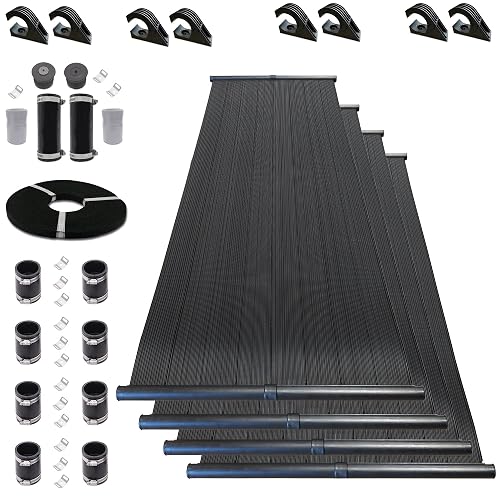
- Collector panels: Usually the largest single item. Unglazed polymer panels are the standard choice for pools because they handle moderate temperatures well and cost less than glazed metal collectors.
- Mounting hardware: Brackets, straps and fasteners rated for roof or ground use. Roof-mounted arrays may need additional structural checks.
- Plumbing and fittings: Supply and return lines, unions, valves and PVC runs. Longer runs and tighter bends add both material and labor.
- Diverter and check valves: A three-way diverter lets you send water to the panels or bypass them. A check valve or vacuum relief device protects your pump and filter.
- Controller or thermostat sensor: Automatic systems with a solar sensor and motorized valve cost more than manual diverter setups but reduce daily attention.
- Labor: Often the most variable line item. Professional installation includes roof work, trenching and plumbing tie-ins.
- Permits and inspections: Some municipalities require them for roof-mounted or structurally involved installs.
Factors That Push the Cost Up or Down
Collector area and sizing accuracy
A common rule of thumb is that collector area should be roughly 50 to 100 percent of pool surface area, depending on climate and temperature goals. An undersized array is the most common reason owners feel they wasted money, because the pool never reaches the temperature they hoped for. Oversizing adds panels you do not need, so getting the number right matters more than chasing the lowest per-panel figure.
Roof versus ground mounting
Roof mounting often saves yard space and can reduce plumbing run length if the roof faces the right direction. It can also add hardware costs and labor for safe access. Ground mounting is usually simpler to install but requires space and a suitable, unshaded location. Panels should face south in the Northern Hemisphere with a tilt roughly equal to your latitude for year-round use.
Flow rate and head height
This is where the water engineering matters. Your pump must push water up to the panels and back through the return line against a total dynamic head (the vertical lift plus friction loss through pipe, fittings and panels). If your existing pump cannot maintain adequate flow through the collectors, you may need a larger or dedicated pump. Manufacturers typically specify a flow range for their panels; running well outside that range reduces heat transfer and can void warranties. Pump upgrades are a real cost line that many buyers forget to budget.
Distance from the pool to the array
Every extra foot of pipe adds friction loss and material. Placing the array close to the equipment pad keeps both costs and head loss down. Long runs buried in trenches add excavation labor.
Controls and automation
A manual diverter valve is inexpensive and easy to work on. Automated controllers with temperature sensors protect against overheating on hot days and reduce how often you walk out to turn a handle. Both approaches work; the choice depends on how much daily attention you want to give the system.
DIY versus professional installation
Competent DIYers can install ground-mounted systems with basic plumbing skills. Roof installs, electrical work for controllers, and any tie-in that involves gas or main electrical service should go to licensed professionals. For roof-mounted systems, consult a licensed roofer or contractor before drilling into the structure.
Step-by-Step: Building a Realistic Budget
- Measure pool volume and surface area.
- Set your target temperature rise and note your local climate and swim season.
- Calculate a preliminary collector area using the 50 to 100 percent guideline.
- Measure your pump’s rated flow and check whether it can handle the added head through the collectors.
- Plan the route from pool to array and count pipe length, bends and valves.
- Decide between roof and ground mounting and note any structural or permit requirements.
- Get at least two itemized quotes, or price components separately if you plan to DIY.
- Add a contingency line for pump upgrades, permits and unexpected fittings.
Quick Sizing Reference
| Pool Type | Typical Climate Goal | Collector Area Guideline | Key Cost Driver |
|---|---|---|---|
| Small above-ground pool | Warm climate, extend season | About 50 percent of surface area | Often a single small array |
| Mid-size inground pool | Moderate climate, 10 to 15 degree rise | About 75 percent of surface area | Roof vs. ground mounting |
| Large inground pool | Cool climate, season extension | Near 100 percent of surface area | Pump upgrade and plumbing run |
Common Mistakes
- Buying by panel count alone. Two arrays with the same number of panels can perform very differently depending on sizing and flow.
- Ignoring head loss. Failing to check whether your pump can push water through the collectors is the most common performance failure.
- Skipping a vacuum breaker or check valve. Without protection, water can siphon back toward the pump when it shuts off, especially with roof-mounted arrays.
- Forgetting the cover. A solar cover on the pool reduces heat loss at night and can improve results significantly for little added cost.
- Underestimating labor and permits. Quotes that look low sometimes exclude these items.
- Placing panels in shade. Even partial shade across a panel can cut output noticeably.
Tips for Getting the Most Value
- Ask every installer to show the collector area, flow rate and total head they designed for.
- Compare systems on cost per square foot of collector area and on warranty terms, not only on sticker totals.
- Use a pool cover in combination with the heater to cut evening heat loss.
- Plan for seasonal maintenance: check fittings, clean debris from panels and drain them before freezing weather where applicable.
Recommended gear
A pool cover is one of the most effective add-ons for any solar heating setup, since it reduces evaporative and nighttime heat loss. Look for a solar blanket sized to your pool’s dimensions. View on Amazon
A digital pool thermometer lets you measure the actual temperature rise across the day so you can judge whether your array is performing as sized. View on Amazon
A vacuum relief valve protects the pump and filter when the pump shuts off with roof-mounted panels above the pool surface. View on Amazon
For deeper detail on sizing and installation, see Solar Power for Pool Heater: How to Size, Set Up and Avoid Mistakes and Solar Pool Heater for Inground Pool Installation: A Step-by-Step Guide (2026). If you are weighing ready-made options, Top 5 Above Ground Solar Pool Heaters for Every Setup compares common configurations, and What Is a Solar Pool Heater Vacuum Breaker and Why Does It Matter? explains the protective valve in more depth.
FAQ
How much does a solar power pool heater cost overall?
The total depends on collector area, mounting style, plumbing length, controls and whether you install it yourself. Compare itemized quotes rather than single headline figures, since the components vary widely.
Do I need a bigger pump for a solar pool heater?
Often, yes. The pump must overcome the head loss through the collectors and the added pipe. Check your pump’s rated flow and the panel manufacturer’s recommended range before deciding. Consult a pool equipment professional if the numbers are unclear.
How big should my solar array be?
A common guideline is 50 to 100 percent of pool surface area, depending on climate and how much warming you want. Cooler climates and longer seasons generally call for a larger array.
Is roof mounting better than ground mounting?
Neither is universally better. Roof mounting saves yard space and can shorten pipe runs, but it adds structural and access considerations. Ground mounting is simpler but needs open, unshaded space.
Can I install a solar pool heater myself?
Ground-mounted systems are within reach for handy owners with basic plumbing skills. Roof work and any electrical controller wiring should be handled by licensed professionals.
Why does my pool not get warm enough?
Common causes include an undersized array, insufficient pump flow, shaded panels, a missing pool cover, or long pipe runs adding too much head loss. Check each in that order.
Do solar pool heaters need maintenance?
Yes. Clean debris from panels, inspect fittings and valves for leaks, check that diverters and controllers operate correctly, and drain panels before freezing weather if your system requires it.
Conclusion
A solar power pool heater cost is driven mainly by the collector area your pool needs, the pump capacity and plumbing required to move water through the array, and your choice of mounting and controls. Size the system from your pool volume and temperature goals first, then price the components. Budget for pump upgrades, permits and labor so the final number is not a surprise.
Ready to choose one?
About Ethan Brooks
Ethan Brooks is part of our editorial team and reviews and edits our solar water systems guides, checking product details against manufacturer specifications and owner feedback.