By Ethan Brooks
Updated November 2026
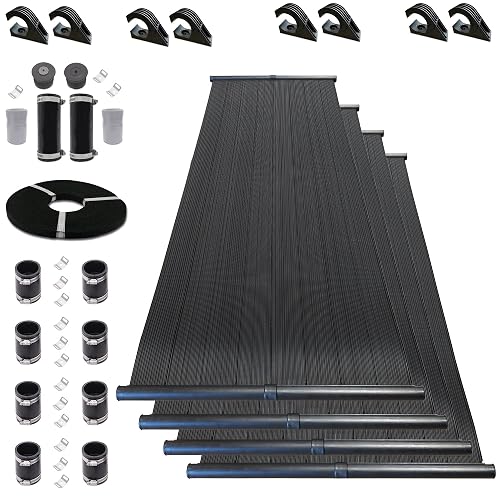
A vidaxl solar pool heater uses roof or ground-mounted collector panels to warm pool water as it passes through the system, usually without any fuel or electricity beyond the filter pump. This guide walks through how to match a vidaxl solar pool heater to your pool volume, how to plan flow and head height so the pump can actually push water through the panels, and where owners tend to run into trouble. The goal is a setup that keeps water warm for longer swims without overworking your pump.
How a vidaxl Solar Pool Heater Works
Most budget solar pool heaters in this category use a set of black polymer tubes or mats. Water from your filter line is diverted to the panels, picks up heat from the sun as it moves through the tubes, and returns to the pool. Nothing is stored, so the heating effect is only as strong as the sunlight and the flow rate at that moment.
Shopping for one? See our guide: Top 5 Solar Water Pool Heater Options Compared for 2026.
Because the heat transfer depends on water spending enough time in the sun, two numbers matter more than anything else: how many square feet of collector you have, and how many gallons per hour your pump moves through them. Get those two right and the rest of the setup is mostly plumbing.
Step 1: Work Out Your Pool Volume
Before you buy or install anything, measure the pool. Sizing is always based on water volume, not surface area alone.
- For a rectangular pool: length × width × average depth (in feet) × 7.5 = gallons.
- For a round pool: diameter × diameter × average depth × 5.9 = gallons.
- For an irregular shape, measure the longest and widest points, estimate the average area, then apply the rectangular formula.
A 16 × 32 foot pool averaging 5 feet deep holds roughly 19,200 gallons. That number drives how much heating surface you need and how long the water should take to cycle.
Step 2: Match Collector Area to Your Pool and Climate
Solar heaters are sized as a percentage of pool surface area. A common rule of thumb is that collector area should be roughly 50 to 100 percent of pool surface area, with the higher end suited to cooler climates or pools used for extended seasons. Pools in hot, sunny regions can often get by on less.
Keep in mind that the manufacturer’s rated coverage is a starting point. Shaded yards, tree cover, or a roof that faces away from the sun will lower real-world output, so plan for the sun your site actually receives.
Step 3: Plan Flow Rate and Head Height
This is where most setups go wrong. Solar collectors add friction, and a tall roof adds static lift. Your pump has to overcome both.
Understanding Head Height
Head height is the vertical distance between the water level at the pool and the highest point of the collector. Every foot of lift costs pump performance. If your collectors sit on a roof 20 feet above the pool, the pump is working against that height on every cycle.
Target Flow Through the Collectors
Solar mats perform best at moderate flow. Too little flow and water overheats in the tubes and the sensor may shut things down; too much and the water rushes past without absorbing much heat. Check the flow range in the manual for your specific model and confirm your pump can deliver it at your actual head height.
| Factor | What to Check | Why It Matters |
|---|---|---|
| Pool volume | Gallons from length, width, depth | Sets how much heat is needed |
| Collector area | 50–100% of pool surface area (typical guideline) | Determines heat gain per cycle |
| Head height | Vertical rise from pool water to top of collector | Reduces pump flow as it grows |
| Pump flow | GPM at your total head | Must stay within the collector’s rated range |
| Sun exposure | Hours of direct sun on the panels | Controls total usable heat |
Step 4: Install the Plumbing Correctly
Once sizing is settled, the install is mostly about routing water in the right order and protecting the system from pressure swings.
Essential Parts Checklist
- Diverter or three-way valve so you can switch between solar and bypass
- Check valve on the supply line to prevent backflow at night
- Vacuum relief valve at the highest point of the collector (see our guide to why it matters)
- Temperature sensor and, if included, a controller that stops flow when the panel is cooler than the pool
- Unions or flexible connections for future service
- Pipe sized to the manufacturer’s recommendation, usually 1.5 to 2 inches
Mounting and Orientation
Face collectors south in the Northern Hemisphere and north in the Southern Hemisphere. Tilt them toward your latitude where the mounting allows, and keep them clear of shade from 9 a.m. to 3 p.m. Slope the collector so it drains completely; standing water in the tubes freezes in cold weather and can split them.
Running the System
Run the pump during the warmest, sunniest part of the day rather than around the clock. Many owners set the timer to cover late morning through mid-afternoon, then adjust based on how quickly the pool responds. Keep the main filtration running as your normal schedule requires.
Common Mistakes
- Undersizing the pump. A pump that worked fine for filtration may not move enough water once head height and collector friction are added.
- Ignoring the vacuum relief valve. Without it, air can lock in the collector and stop flow entirely.
- Letting collectors sit in shade. Even a partial shadow across a few mats can cut output noticeably.
- Running the pump at night. Water loses heat faster than the panels can recover it after dark, so night circulation can cool the pool.
- Skipping winterization. In freezing climates, drain or bypass the collectors before temperatures drop.
- Mounting above the pump’s effective lift. If the top of the collector is beyond what the pump can lift at a usable flow rate, relocate the panels or add a second pump.
Tips for Better Results
- Install a pool cover overnight to hold in the heat gained during the day.
- Check the pressure gauge monthly and clean the filter basket so flow stays steady.
- Track the pool temperature for a week before and after adding the heater to see your actual gain.
- Inspect tubing and connections each spring for cracks or UV wear.
Recommended gear
Several parts help make a solar setup reliable, especially around flow and head height. A few common options:
- Pentair Hi-Flo Pool Pump: a pump with enough headroom to handle collector friction and elevation. View on Amazon
- Hayward Automatic Pool Cover: retains heat overnight and reduces evaporation. View on Amazon
- Hayward Three-Way Diverter Valve: lets you switch between solar and bypass easily. View on Amazon
FAQ
How long does it take a vidaxl solar pool heater to warm a pool?
Warming time depends on pool volume, collector area, sunlight and flow. Many owners see gradual gains over several sunny days rather than a sudden change, so judge performance over a week, not a single afternoon.
Can I run a solar pool heater without a pump?
No. The collectors rely on the filter pump to move water through the tubes. Gravity alone is not enough, especially with any head height.
Does a vidaxl solar pool heater work in cold weather?
It works best in warm, sunny conditions. In cold weather, water loses heat quickly and output drops. Drain or bypass the collectors before freezing temperatures arrive.
How far can the collectors be from the pool?
Longer runs add friction and reduce flow. Keep piping as short as practical and check the manufacturer’s maximum recommended length.
Do I need a controller?
Not always, but a controller or temperature sensor prevents the system from running when the panels are cooler than the pool, which would pull heat out of the water.
Why is my pool not getting warmer?
Common causes include insufficient flow, shading, a trapped-air problem at the collector, or a pool left uncovered at night. Check the pump pressure and sun exposure first.
Should I consult a professional for installation?
If your roof work, electrical connections or gas heater backup are involved, consult a licensed professional. Solar pool heaters involve pressure and plumbing, so a qualified installer can confirm your sizing and flow.
Conclusion
A vidaxl solar pool heater performs best when you size collectors to your pool volume and climate, then confirm that your pump can deliver enough flow through the panels at your real head height. Map out the plumbing, protect the system with a vacuum relief valve and sensible scheduling, and pair it with a pool cover to hold the heat. Take the time to measure before you install and the system will reward you with longer, warmer swim seasons.
Related reading
- Xtremepowerus Solar Pool Heater: Setup, Sizing and Common Mistakes
- What Is a Solar Pool Heater Vacuum Breaker and Why Does It Matter?
- Vacuum Relief Valve Solar Pool Heater Review: Features and Performance
Ready to choose one?
About Ethan Brooks
Ethan Brooks is part of our editorial team and reviews and edits our solar water systems guides, checking product details against manufacturer specifications and owner feedback.