 By Ethan Brooks
Updated November 2026
A solar powered water pump for farms moves water from wells, ponds and tanks without grid power, which matters a lot for remote pastures and livestock troughs. The right choice depends on three numbers: flow rate in gallons per minute (GPM), maximum lift in feet, and whether the pump runs directly from panels or through a controller and battery. The picks below are ranked by how well each one matches those criteria for typical farm jobs, based on manufacturer specifications and patterns in owner feedback. We have not tested these pumps ourselves.
Our top picks at a glance
- 1
 TOP CHOICEBest overallECO-WORTHY Solar Well Pump Kit – 100W Solar Panel with 12V Deep Well Water PumpView on Amazon
- 2
 TOP CHOICEBest for shallow livestock ponds150W 12V DC Solar Submersible Pump, 2inch Solar Deep Well Water PumpView on Amazon
- 3
 TOP CHOICEBest for trough aerationSolar & USB Dual Charging Oxygen Pump for Livestock TroughView on Amazon
- 4
 Best for high-volume irrigationSolar Water Pump, 48V 500W DC Submersible Deep Well Pump, 3 inch Stainless SteelView on Amazon
- 5
 Best for budget farm useBACOENG DC 12V Farm & Ranch Solar Water Pump Submersible Well PumpView on Amazon
- 6
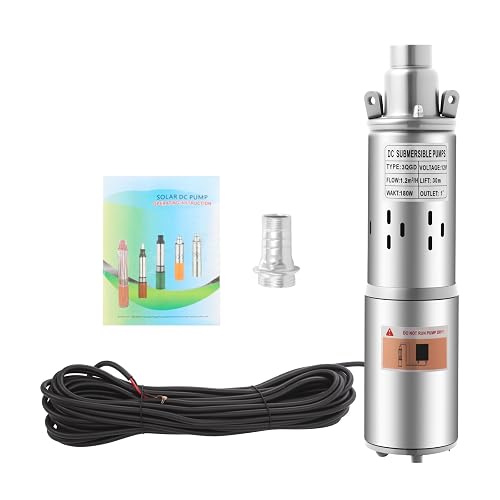 Best for deep wells12V Submersible Deep Well Pump 180W, Stainless Steel 4.4GPM 98ft LiftView on Amazon
- 7
 Best for light irrigationECO-WORTHY 12V DC Submersible Well Water Pump with 10ft Cable, Water FView on Amazon
Our Top Picks
Quick Comparison
| Product | Best for | Key feature |
|---|---|---|
| ECO-WORTHY Solar Well Pump Kit | Off-grid well water | 100W panel with pump |
| 150W 12V DC Solar Submersible Pump | Ponds and livestock | 26 GPM flow rate |
| Solar & USB Dual Charging Oxygen Pump | Trough aeration | Dual solar and USB charging |
| Solar Water Pump 48V 500W Deep Well Pump | High-volume irrigation | MPPT controller included |
| BACOENG DC 12V Farm & Ranch Solar Water Pump | Budget farm use | 26 ft lift rating |
| 12V Submersible Deep Well Pump 180W | Deep wells | 98 ft lift rating |
| ECO-WORTHY 12V DC Submersible Well Water Pump | Light irrigation | 100 ft max lift |
ECO-WORTHY Solar Well Pump Kit – 100W Solar Panel with 12V Deep Well Water Pump
ECO-WORTHY Solar Well Pump Kit – 100W Solar Panel with 12V Deep Well Water Pump for Off-grid Living or Irrigation, Farm & Ranch-DELIVERY IN 2 PARCELS One
Best for: Off-grid well water and general farm irrigation
This kit suits farmers who want a complete panel-and-pump package rather than sourcing components separately, and it is designed for off-grid living or irrigation use.
- Pros: Includes panel and pump together; designed for farm and ranch use
- Pros: Delivered in two parcels, which simplifies handling
- Cons: Output depends on panel sun exposure, so plan for reduced flow on cloudy days
150W 12V DC Solar Submersible Pump, 2inch Solar Deep Well Water Pump
150W 12V DC Solar Submersible Pumps, 2inch solar deep well water pump ,Max head 20ft, 26GPM Flow for pond or livestock (update-12V)
Best for: Shallow livestock ponds and stock tanks
Listed with a maximum head of 20 feet and 26 GPM flow, this pump fits operations that lift water a short distance into a pond or tank.
- Pros: Rated 26 GPM, useful for filling troughs quickly
- Pros: Compact 2-inch body fits many casings
- Cons: The 20 ft head limit rules out deeper wells
Solar & USB Dual Charging Oxygen Pump for Livestock Trough
Solar & USB Dual Charging Oxygen Pump,Keeps Water Circulating for Livestock Trough,Pond and Aquarium Use Solar Horse Water Trough Aerator,Portable Oxygen Bubbler for Fish Tank
Best for: Trough aeration and keeping water from stagnating
This is an aerator rather than a lift pump, so it suits keeping existing water moving and oxygenated instead of delivering water to a new location.
- Pros: Charges by solar or USB, giving a backup option
- Pros: Portable, so it moves between troughs easily
- Cons: Not suitable for pumping water over distance or height
Solar Water Pump, 48V 500W DC Submersible Deep Well Pump, 3 inch Stainless Steel
Solar Water Pump, 48V 500W DC Submersible Deep Well Pump, 3 inch Stainless Steel Deep Well Pump with MPPT Controller for Industrial Irrigation Household Water Tank Water Supply
Best for: High-volume irrigation and larger water supply systems
Its 500W rating and MPPT controller target operations that need sustained output from a larger array, such as field irrigation or household tank supply.
- Pros: 500W rating supports higher flow than small kits
- Pros: MPPT controller improves panel-to-pump efficiency
- Cons: Requires a properly sized array and wiring, which adds setup effort
BACOENG DC 12V Farm & Ranch Solar Water Pump Submersible Well Pump
BACOENG DC 12V Farm & Ranch Solar Water Pump Submersible Well Pump 26ft Lift
Best for: Budget farm use with modest lift needs
A straightforward 12V submersible option for farmers who need a 26 ft lift and want to keep the system simple.
- Pros: Simple 12V design works with standard panels and batteries
- Pros: Rated specifically for farm and ranch use
- Cons: The 26 ft lift limit is modest for deep wells
Buying Guide
Flow Rate (GPM)
Flow rate, measured in gallons per minute, tells you how much water the pump can deliver. Match the GPM to your daily water needs and how quickly you need the tank or trough refilled. Higher flow is useful for irrigation, while small livestock troughs often need much less.
Maximum Lift
Maximum lift is the vertical distance in feet the pump can push water up from the source. Measure the depth from the water level in your well or pond to the highest point where water must go. Choose a pump with lift comfortably above that number, since flow drops as lift increases.
Solar Panel Wattage and Power Setup
Pumps are rated for a certain power input, and the solar array needs to supply enough wattage for reliable operation, especially on cloudy days. Some systems run directly from panels, while others use an MPPT controller or battery to smooth out power. Check whether the kit includes the panel, controller and wiring you need.
Voltage and Pump Type
Most small farm systems use 12V DC pumps, while larger industrial jobs may call for 48V systems. Submersible deep well pumps suit wells and deep sources, while floating or surface units work for shallow ponds and troughs. Matching voltage and pump type to your water source keeps installation simple and efficient.
Build Quality and Water Source Compatibility
Look for stainless steel housings, sealed motors and an IP68 or similar rating if the pump will sit underwater for long periods. Confirm the pump’s pipe diameter and cable length fit your setup. Durable construction helps the pump hold up to mud, sediment and seasonal weather.
FAQ
Can a solar powered water pump work on cloudy days?
Output drops when sunlight is weak, so flow will be slower on overcast days. Many farmers pair the pump with a battery or size the panel array with extra wattage to keep water moving. Checking the manufacturer’s recommended panel size for your pump is a good starting point.
How do I know how much lift I need?
Measure from the water surface in your well or pond up to the highest outlet point, including any vertical pipe run. Add a small margin for friction losses in the pipe. Choose a pump whose maximum lift is clearly higher than that total.
Is a solar pump suitable for livestock troughs?
Yes, especially for remote troughs far from grid power. Smaller pumps and aerators can keep water fresh and moving without a large investment. Make sure the flow rate matches how much your animals drink each day.
Do I need a battery with a solar water pump?
A battery is not always required, since some pumps run directly from the panel while the sun is out. However, a battery or controller can provide steadier operation and let you pump water during low-light periods. Your water demand and the pump’s design will guide the decision.
What maintenance do solar water pumps need?
Keep panels clean, check cable connections for corrosion, and clear any debris from the intake screen. Periodically inspect the pump for sediment buildup, especially in muddy ponds. Regular checks extend the life of the system.
Conclusion
Farmers with deep wells and higher irrigation needs should look at the larger deep well kits, where lift and flow matter most. Those managing shallow ponds or livestock troughs will often do well with smaller pumps or aerators that match modest daily water use.
Start by measuring your lift and daily water needs, then compare GPM and power setup against those numbers. The right pump is the one that fits your source, your demand and your sunlight.
Related reading
- Why Does My Solar Powered Hot Water Pump Stop Working? Causes and Fixes
- Top 5 Solar Powered Water Pumps for Cattle Options Compared (2026)
- Top 4 Solar Powered Water Pumps with Timer Options Compared for Gardens
- Solar Powered Water Well Pump Systems: A Step-by-Step Guide (2026)
About Ethan Brooks
Ethan Brooks is part of our editorial team and reviews and edits our solar water systems guides, checking product details against manufacturer specifications and owner feedback.


