By Ethan Brooks
Updated November 2026
A solar powered hot water pump usually stops working for one of a few reasons: the panel isn’t getting enough sun, the pump is being asked to lift water higher or further than its rating allows, or the controller is shutting it off to protect the motor. Start by checking sunlight at the panel and the pump’s rated head and flow, then work through the wiring and controller.
Why a Solar Powered Hot Water Pump Loses Output
Solar pumps are sized to a specific combination of sun, head height and flow. When any one of those drifts outside the design range, output drops or the pump stalls. Hot water systems add another wrinkle: the pump is moving water that is already warm, and that water is often pulling from a tank or collector loop where pressure and temperature both affect performance.
Shopping for one? See our guide: Solar Powered Water Pump for Small Fountain: 7 Best Picks Compared (2026).
Many owners find that the pump runs fine in the morning and then fades around midday or in the afternoon. That pattern usually points to a sun or shading problem, not a failed motor.
The Factors That Matter Most
Work through these in order. Each one is easy to measure with basic tools.
- Panel exposure. Even partial shade from a branch, a chimney or a neighbor’s roofline can cut output sharply. Check the panel at the time of day when the pump struggles.
- Total dynamic head. This is the vertical lift plus friction loss through pipe and fittings. Manufacturers publish a maximum head for each model. If your installation exceeds it, the pump may run but deliver little flow.
- Flow rate. Compare measured flow (a bucket and a timer will do) against the rated gallons per minute at your actual head. A pump rated at a given flow at zero head will deliver much less at 20 feet of lift.
- Controller or thermostat settings. Many active solar hot water systems use a differential controller that only runs the pump when the collector is warmer than the tank by a set margin. If that margin is wrong, the pump will cycle or never start.
- Wiring and connections. Corroded terminals, undersized wire over a long run, and loose connectors all cause intermittent operation. Voltage drop is a common hidden cause.
How to Diagnose and Fix It
- Confirm the panel is clean and unshaded at midday. Wipe off dust, leaves and bird droppings.
- Measure the vertical lift from the water source to the highest outlet point, then estimate friction loss from pipe length and fittings.
- Check the pump’s head-flow curve in the manufacturer’s data. If your total head is near or above the maximum, the pump is undersized for the job.
- Time how long it takes to fill a known-volume container. Compare that flow to the spec at your head height.
- Inspect the controller settings and confirm the sensor is seated correctly on the collector or tank.
- Check every connection for corrosion and tighten or replace as needed. Measure voltage at the pump under load if you have a meter.
If the pump is undersized, the usual fix is a larger panel array or a pump rated for higher head. Reducing friction loss by using a larger pipe diameter and fewer elbows can also recover flow without replacing the pump. For pressure-related issues, see our guide to Solar Water Heater Pressure Pump: How to Size and Set One Up, and for controller-related problems, Solar Water Heater Pumps and Controllers: How Active Systems Run explains how the logic works.
What We’d Use
If your existing pump is marginal for your head and flow, a submersible solar unit with a published head curve makes sizing easier to verify. Look for a pump that clearly lists maximum head and flow at multiple heights.
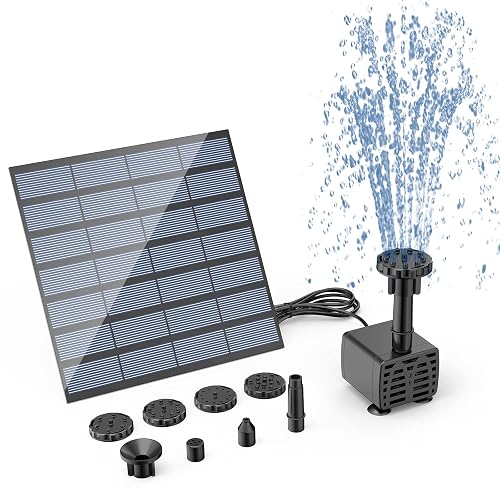
- Submersible solar fountain pump kit. Useful for small ponds or garden water features where head is modest. View on Amazon
- Solar water pump with battery backup. Helpful if you need water after dark or on cloudy days. View on Amazon
FAQ
Why does my solar pump run in the morning but stop at midday?
This often means the panel is overheating or the controller is cutting power when output dips. Check for shade, dust and whether the controller has a temperature cutoff. Output can also fall if the battery is full and the controller limits charging.
How do I know if my pump is too weak for the head?
Measure total head and compare it to the manufacturer’s head-flow chart. If your head is near the pump’s stated maximum and flow is very low, the pump is undersized for the job.
Is it safe to work on the wiring myself?
Low-voltage DC wiring is manageable for many owners, but if you’re unsure about connections, load testing or any work involving a battery or mains-connected backup, consult a qualified installer or electrician.
Related reading
- Solar Powered Water Well Pump Systems: A Step-by-Step Guide (2026)
- 7 Best Solar Powered Water Fountain Pump Picks Compared (2026)
- 7 Best Solar Powered Water Fountain Pump Kits for Garden Ponds (2026)
- 6 Best Solar Powered Water Fountain Pumps with Battery Backup (2026): Our Picks
Ready to choose one?
About Ethan Brooks
Ethan Brooks is part of our editorial team and reviews and edits our solar water systems guides, checking product details against manufacturer specifications and owner feedback.