 By Ethan Brooks
Updated November 2026
Choosing a plumbing solar pool heater starts with matching the collector and header to your pool’s flow rate, head height and plumbing layout. This guide compares five options on how well they suit DIY installers: header diameter, panel size, mounting approach, freeze resistance and how the kit fits common pool circulation setups. Each pick is based on manufacturer specifications and patterns owners commonly report, not on personal testing.
Our top picks at a glance
- 1
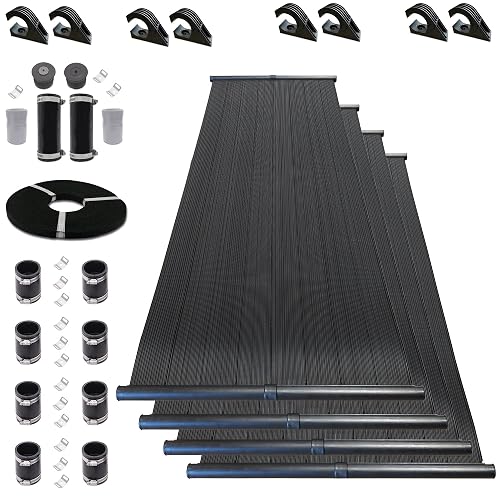 TOP CHOICEBest overallHighest Performing Design DIY Solar Pool Heater KitView on Amazon
- 2
 TOP CHOICEBest for electric backupBeluga B50V TURBRO 50,000 BTU Inverter Pool HeaterView on Amazon
- 3
 TOP CHOICEBest for large poolsSolar Pool Heater for Inground and Above Ground Pools up to 20,000 GallonsView on Amazon
- 4
 Best for windy sitesIndustrial Grade Solar Pool Heater DIY KitView on Amazon
- 5
 Best for panel replacementUniversal Solar Pool Heater Panel ReplacementView on Amazon
Our Top Picks
| Product | Best for | Key feature |
|---|---|---|
| Highest Performing Design DIY Kit | Overall DIY installs | 1.5″ header, 15–20 year life |
| Beluga B50V TURBRO Inverter Heater | Electric backup heating | 50,000 BTU inverter |
| Solar Pool Heater for 20,000 Gal | Large pools | Rated up to 20,000 gallons |
| Industrial Grade DIY Kit | Windy locations | Strapless high-wind mounting |
| Universal Panel Replacement | Replacing worn panels | 4′ x 12′ panel, 2″ header |
Highest Performing Design DIY Solar Pool Heater Kit
Highest Performing Design – DIY Solar Pool Heater Kit – 15-20 Year Life Expectancy (4-4×10 / 1.5" I.D. Header)
Best for: Overall DIY installs with a standard circulation loop.
This kit suits installers who want a balanced, mid-size collector with a 1.5-inch header that fits common pool return lines. The 4-4×10 layout is a practical match for many residential inground pools.
Pros
- 1.5-inch header suits typical pool plumbing
- Manufacturer lists a 15–20 year life expectancy
Cons
- Requires careful flow balancing on high-head layouts
Beluga B50V TURBRO 50,000 BTU Inverter Pool Heater
WiFi Enabled, 15.90 COP, IPX4-Waterproof, Electric Swimming Pool Heat Pump for in and Above-Ground Pools, Beluga B50V TURBRO 50,000 BTU Inverter Pool Heater, Up to 15,000 Gallons, 220-240 V
Best for: Electric backup heating when solar output drops.
This is a heat pump rather than a solar collector, so it suits owners who want a supplemental or cloudy-day heating option. It is rated for pools up to 15,000 gallons and needs a 220–240 V connection.
Pros
- Inverter design with WiFi control
- Rated IPX4 for outdoor installation
Cons
- Needs a dedicated 220–240 V circuit
Solar Pool Heater for Inground and Above Ground Pools up to 20,000 Gallons
Solar Pool Heater for Inground & Above Ground Pools up to 20000 Gallons, 220V (Solar Panels Not Included)
Best for: Large pools that need higher total collector area.
Intended for bigger volumes, this option is sized for pools up to 20,000 gallons. Solar panels are sold separately, so the plumbing and panel count must be matched carefully. You may also like Winterizing Solar Pool Heater: 6 Best Kits and Covers for 2026.
Pros
- Rated for pools up to 20,000 gallons
- Works with inground or above-ground pools
Cons
- Panels not included, adding planning work
Industrial Grade Solar Pool Heater DIY Kit
Industrial Grade Solar Pool Heater DIY Kit – Superior High-Wind Strapless Mounting System & Maximum Freeze Resistance (2-4'x7.5' / 60 Square Feet)
Best for: Windy sites where mounting security matters most.
The strapless high-wind mounting system and freeze-resistance focus make this kit a reasonable choice for exposed roofs and ground mounts in breezy regions.
Pros
- Strapless mounting designed for high wind
- Listed with maximum freeze resistance
Cons
- Larger footprint at 60 square feet
Universal Solar Pool Heater Panel Replacement
Highest Performing Design – Universal Solar Pool Heater Panel Replacement – 15-20 Year Life Expectancy (4' X 12' / 2" I.D. Header)
Best for: Replacing worn panels on an existing system.
Owners with a working manifold and header often choose a replacement panel rather than a full kit. Confirm the 2-inch header matches your existing connections before buying.
Pros
- Drop-in option for existing 2″ header systems
- Manufacturer lists a 15–20 year life expectancy
Cons
- Not a full system, so fittings may need buying separately
Buying Guide
Match the header diameter to your plumbing
Measure your existing return and supply lines before choosing a header size. A mismatch between a 1.5-inch and 2-inch header forces adapters that can restrict flow and reduce heating.
Check flow rate against panel area
Manufacturers usually specify a recommended flow range per panel. Your pump must deliver enough gallons per minute through the collector without creating excessive head loss; see What Pump to Use for DIY Solar Pool Heater: A Flow-First Guide.
Plan for freeze and wind exposure
In cold regions, drain-down or freeze-protection strategy matters as much as the panel itself. Wind-rated mounting reduces the risk of panels lifting during storms.
FAQ
Can a DIY installer really set up a plumbing solar pool heater without a professional?
Many handy homeowners complete a solar pool heater installation themselves, especially with a kit that includes clear instructions and matched fittings. Basic plumbing skills, a good understanding of your pump and filter layout, and a careful check for leaks are usually enough. If your pool plumbing is complex or you are unsure about bypass valves, consider having a licensed pro review the work.
How do I know which header diameter fits my pool plumbing?
Measure the existing supply and return lines on your pool circulation system, then compare them with the header size listed for each kit. A header that is too small restricts flow and reduces heating, while one that is too large can complicate connections. Check the manufacturer’s fitting guide before buying, since adapters can help but add extra joints that may leak.
Do I need to drain the pool or shut off the system during installation?
You do not need to drain the pool, but you will need to shut off the pump and close the valves so you can cut and connect the plumbing safely. Keep the pool water level above the skimmer during the work, and have plumbing clamps and sealant ready. Turning the system back on slowly and checking every joint for drips is a good final step.
Will a solar pool heater work in cold or windy climates?
Solar heaters depend on sunlight, so performance drops on overcast days and in cooler seasons, and wind can affect mounting stability. Kits designed for high-wind mounting and freeze resistance are better suited to these conditions. In very cold regions, you will also want a drain-down or winterizing plan to protect the panels and plumbing.
Can I pair a solar heater with an electric backup heater?
Yes, combining solar collection with an electric backup is a common approach for extending the swimming season. Solar handles the free daytime heat, while an electric unit can top up the temperature on cloudy days or in the evening. Make sure the backup unit’s electrical requirements and flow rate are compatible with your pump and plumbing.
How long do solar pool heater kits typically last?
Lifespan depends on materials, UV exposure, water chemistry and how well the system is winterized, and several kits list an expected life in the range of fifteen to twenty years. Regular inspections of seals, fittings and panel surfaces help you catch wear early. Replacing a worn panel or header is often more practical than replacing the whole system.
Conclusion
If you want the most versatile DIY setup and have matched plumbing for a standard circulation system, the Highest Performing Design DIY Solar Pool Heater Kit is a strong starting point, while the Industrial Grade kit suits those in windy or freeze-prone areas who need larger collector area. Owners who want heating that works around the clock may prefer the Beluga B50V inverter heater as a backup or primary option.
For smaller pools or replacement needs, the Universal Solar Pool Heater Panel Replacement and the solar heater for pools up to 20,000 gallons offer focused choices, and it is worth confirming header size and flow rate before buying. Match the kit to your pool’s volume, plumbing and climate, and the right pick will be the one that fits your setup most cleanly.
Related reading
- Solar Pool Heater Plumbing Diagram: Step-by-Step Layout for Beginners
- Xtremepowerus Solar Pool Heater: Setup, Sizing and Common Mistakes
- When to Run Solar Pool Heater: Timing for Best Results
- When Should I Turn On My Solar Pool Heater? A Practical Timing Guide
- What Size Tubing for Solar Pool Heater: A Step-by-Step Guide
About Ethan Brooks
Ethan Brooks is part of our editorial team and reviews and edits our solar water systems guides, checking product details against manufacturer specifications and owner feedback.