By Ethan Brooks
Updated November 2026
A solar mat pool heater is one of the simplest ways to warm pool water without burning fuel or running a gas heater. In this guide you will learn how these black polymer mats capture sunlight, how to size one for your pool, how to plumb it so water flows evenly, and which mistakes cause poor heating. Most of the work comes down to matching the mat’s flow rate and head loss to your pump, so we start there.
How a Solar Mat Pool Heater Works
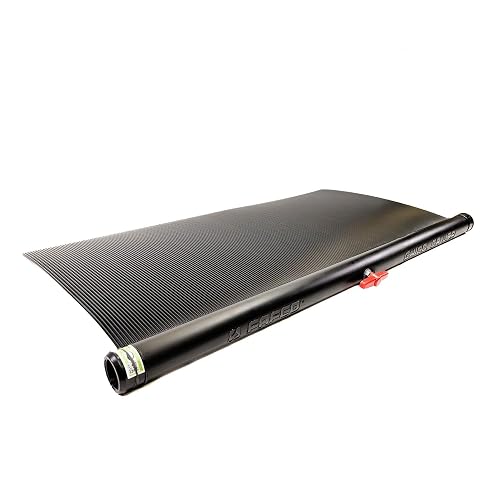
A solar mat pool heater is a flat, black, UV-stabilized polymer mat with a grid of small internal channels. Pool water is pumped through these channels while the mat sits in direct sun, usually on a roof or a rack. The dark surface absorbs solar radiation and transfers the heat to the water as it passes through. Because the mat has no glass cover and no insulated box, it works best in warm climates and at moderate water temperatures. Owners often report the largest gains in late spring and early summer, when air temperatures are high but water is still cool.
Shopping for one? See our guide: Top 5 Solar Water Pool Heater Options Compareds for 2026.
Unlike flat-plate collectors with glazing, a mat relies on flow volume rather than insulation. That makes flow rate, not panel size alone, the key performance variable.
Step 1: Measure Your Pool and Pump
Before buying any mat, gather the numbers that drive sizing. Guesswork here is the most common reason systems underperform.
- Pool surface area in square feet (length times width for rectangular pools; for irregular shapes, approximate with the closest rectangle).
- Pool volume in gallons, if you know it.
- Pump rated flow in gallons per minute (GPM) at your filter’s operating pressure, not the pump’s maximum GPM on the label.
- Total dynamic head (TDH), the vertical lift plus friction loss through pipe and fittings, if you can estimate it.
- Your typical sunny-day hours and the local climate, especially whether nights are cool enough to cause heat loss.
A clean filter and a pump running at its normal speed give you the most realistic flow reading.
Step 2: Size the Mat for Your Pool
Sizing a solar mat pool heater is mostly about matching collector area to the pool’s surface area and the heating you expect. A common rule of thumb for mats is to plan on roughly 50 to 100 percent of pool surface area in collector area for a useful temperature rise in warm, sunny climates, with the upper end suited to cooler regions or pools you want warm earlier in the season. Treat this as a starting range, not a guarantee. Shade, wind, and cover use all shift the result.
| Pool Surface Area | Typical Mat Coverage Target | Best Fit |
|---|---|---|
| Up to 300 sq ft | About 150 to 300 sq ft of mat | Small above-ground pools |
| 300 to 500 sq ft | About 200 to 400 sq ft of mat | Mid-size pools in warm regions |
| 500 sq ft and up | Often 300 sq ft or more, split across racks | Large pools; plan on a bank of mats |
For a deeper walkthrough of panel counts and calculation methods, see Solar Pool Heater Sizing: How Many Panels Does Your Pool Need? and Solar Pool Heater Sizing Calculator: How Many Panels Do You Need?.
Check that the pump’s flow can actually serve the mat area. Each mat has a rated flow range; running too little water lets it overheat in the channels, and running too much cuts temperature rise. Match the total mat flow to a realistic share of your pump’s GPM, and if your pump is oversized, use a bypass valve to throttle flow to the heater.
Step 3: Plan the Plumbing Layout
Good plumbing matters as much as collector area. Water should enter the mat at the bottom and exit at the top, or follow the manufacturer’s stated direction, so that air escapes and channels stay full. Keep the run from pump to mat and back as short as practical, because every extra foot of pipe and every elbow adds head loss and reduces flow.
Key plumbing rules
- Install the heater after the filter, so debris does not clog the channels.
- Place a check valve or vacuum breaker where recommended to prevent backflow into the pump when it shuts off. See What Is a Solar Pool Heater Vacuum Breaker and Why Does It Matter? for how that device protects the system.
- Include a bypass or diverter valve so you can send water around the heater in winter or on cloudy days.
- Use a temperature sensor and, if your controller supports it, an automatic diverter that sends water to the mat only when the roof is warmer than the pool.
- Slope the supply and return lines so the system can drain for winter, and install drain valves at the low points.
For a visual overview of how the parts connect, see Solar Pool Heater Plumbing Diagram: Step-by-Step Layout for Beginners.
Step 4: Mount the Mat Securely
Mount mats on a rack or roof that faces the sun for most of the day. In the Northern Hemisphere, that generally means a south-facing or near-south orientation, tilted to roughly your latitude for year-round use. Mats are often installed flat for pool heating in summer, which is acceptable, but a modest tilt sheds rain and reduces standing water. Use manufacturer-approved hardware and allow room for thermal expansion. Fasten the mat so it stays flat without being stretched, and avoid sharp points that could puncture the material.
If you are working on a roof, confirm the structure can carry the added weight of water-filled mats and that flashing and penetrations are sealed properly.
Step 5: Start Up and Tune the System
- Prime the pump and open the bleed valves until all air leaves the mat.
- Run the pump and check for leaks at every connection.
- Set the diverter to send water to the mat during peak sun hours.
- Read the inlet and outlet temperatures with a thermometer after one hour, then again at midday. A healthy temperature rise on a sunny day is what you are looking for, and the exact number depends on flow, sun, and wind.
- Adjust the valve to balance flow. If the mat outlet runs very hot, increase flow; if the temperature rise is tiny, reduce flow.
Recommended gear
- Pool Solar Heater Diverter Valve: Automatically sends water to the mat only when the roof is warmer than the pool, which prevents heat loss at night. View on Amazon
- Pool Solar Heater Vacuum Breaker: Stops water from draining back out of the mat into the pump when the system shuts off. View on Amazon
- Digital Pool Thermometer: Lets you measure inlet and outlet temperatures to check real heating performance. View on Amazon
- Pool Solar Heater Mounting Kit: Brackets and straps for securing mats on a roof or rack without stretching them. View on Amazon
Common Mistakes
- Oversizing the pump. A pump that pushes too much water through the mat cools the outlet and reduces temperature gain. Use a bypass to balance flow.
- Undersizing the pump. Too little flow leaves water sitting in the mat, causing it to overheat and degrade over time.
- Skipping the vacuum breaker. Without it, water drains back into the pump and can leave air pockets that stop flow.
- Running the heater at night. Without a diverter, the mat can pull heat out of the pool once the sun sets.
- Ignoring pipe length. Long, narrow runs cut flow and increase head loss, so the system underperforms even with the right mat size.
- Leaving air in the lines. Trapped air blocks channels and causes uneven heating across the mat.
FAQ
How hot can a solar mat pool heater make the water?
Results depend on sun, air temperature, wind, flow rate, and mat area. Many owners report a meaningful temperature rise on sunny days, but mats do not reach the high temperatures of gas or heat pump systems. Use a thermometer to measure your own results.
Do I need a diverter valve?
A diverter is strongly recommended. It sends water to the mat only when the roof is warmer than the pool, which prevents the mat from cooling your pool overnight or on cloudy days.
Can I run a solar mat pool heater with a variable-speed pump?
Yes. A variable-speed pump lets you lower flow for better temperature rise and raise it for filtration. Check the mat’s flow range before changing speeds.
Where should the mat be installed?
Choose a location that gets direct sun for most of the day, ideally with minimal shade from trees or buildings. A roof or rack facing south in the Northern Hemisphere is typical.
How do I winterize a solar mat pool heater?
Turn off the pump, open the drain valves at the low points, and use the bypass to isolate the mat. In freezing climates, follow the manufacturer’s winterization steps and consider removing the mat entirely.
Is a solar mat heater a good match for an above-ground pool?
Often yes, because above-ground pools are usually smaller and easier to size. Confirm that your pump can deliver the required flow through the plumbing you plan to use.
Does pool cover use affect heating?
Yes. A solar pool cover reduces evaporation and heat loss, which can make the mat’s job easier. Cover the pool when not in use for the best results.
Should I consult a professional?
If your roof structure, electrical controls, or gas-fired backup are involved, consult a licensed installer or electrician. Pool plumbing that ties into your main water system should also be checked by a professional.
Conclusion
A solar mat pool heater can extend your swimming season with low running costs and simple maintenance. Success depends on sizing the mat to your pool area, matching flow to your pump, and keeping plumbing short and well-vented. Add a diverter and vacuum breaker, and check temperatures with a thermometer to confirm the system is working as intended.
Related reading
Ready to choose one?
About Ethan Brooks
Ethan Brooks is part of our editorial team and reviews and edits our solar water systems guides, checking product details against manufacturer specifications and owner feedback.