By Ethan Brooks
Updated November 2026
An Enersol solar pool heater uses unglazed collector panels to warm pool water with sunlight instead of gas or electricity. This guide walks you through how these systems work, how to size one for your pool’s volume and climate, how to plumb and set it up, and which mistakes most often reduce output. By the end, you should be able to judge whether an Enersol-type system fits your pool and install it so it runs safely and efficiently.
How an Enersol Solar Pool Heater Works
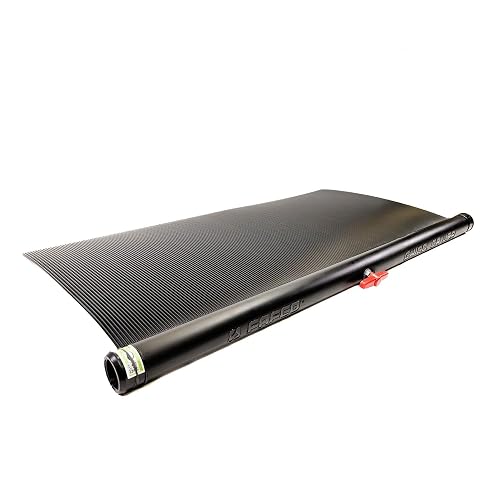
Most solar pool heaters, including Enersol-style systems, are unglazed polymer collectors. Pool water is pulled from the filter return line by the existing pool pump, routed through the panels where sunlight warms it, and sent back to the pool. Because the panels have no glass or insulated housing, they are inexpensive to build and tolerate pressure and freezing well, but they only heat water when the collectors are warmer than the pool.
Shopping for one? See our guide: Top 5 Solar Water Pool Heater Options Compareds for 2026.
That last point matters. Unglazed collectors work best in warm weather with moderate wind. On a cool, windy day, the panels can lose heat faster than they gain it, and the water coming back to the pool may be no warmer than what went in. Expect the greatest benefit in late spring through early fall, and plan on a pool cover to hold the heat you gain.
Key components
- Polymer solar collector panels (the heat exchangers)
- Manifold or header pipes that split and combine flow
- Diverter or three-way valve that sends water to the panels or bypasses them
- Check valve and vacuum relief valve
- Temperature sensor and, on automated setups, a controller
- Connecting PVC or flexible hose, clamps and fittings
Step 1: Size the System for Your Pool
Sizing is the step that decides whether your pool heats well or disappoints. Undersized panels won’t reach a comfortable temperature, and oversized panels add cost without much gain, since the pool can only absorb so much heat at once.
Start with your pool’s surface area and volume. A common rule of thumb is that solar collector area should be roughly 50 to 100 percent of the pool’s surface area, with the higher end suited to cooler climates or where you want to extend the season. Confirm the exact figure against the manufacturer’s sizing chart, because collector area ratings differ between models.
Sizing inputs to gather
- Pool length, width and average depth (for volume)
- Surface area in square feet
- Your local average sunshine hours and typical air temperatures
- Target water temperature (many owners aim for 78 to 84°F)
- Pump flow rate in gallons per minute (GPM)
- Pool cover use (yes or no)
Check the flow rate
Your pump must push enough water through the collectors. Manufacturers typically specify a flow range per panel or per array. If your pump moves 50 GPM but the panels are rated for 20 to 40 GPM, you may need a second return path or a flow adjustment. Running too much flow reduces the water’s time in the panels, so it heats less per pass. Running too little can cause uneven heating and extra pump strain. Measure your actual flow with a flow meter or by timing a known volume into a bucket.
Step 2: Choose a Mounting Location
Panels should face as close to true south as possible in the Northern Hemisphere, with a tilt roughly equal to your latitude for year-round use. Many installations work well with the panels flat on a roof or ground rack, since unglazed collectors perform reasonably at low angles. Avoid shade from trees and nearby structures during the hours of peak sun.
Keep the collectors as close to the pool as practical. Long pipe runs add friction loss, which increases the work your pump must do, and they lose heat to the surroundings. If the roof is the only option, make sure it can carry the weight and that the penetrations are sealed properly.
Step 3: Plumb the System
Plumbing is where most installation errors happen. The goal is to route water from the pump outlet through the panels, then back to the pool, with valves that let you bypass the panels when they’re not needed.
- Turn off the pump and the breaker. Relieve any pressure in the lines.
- Install the diverter valve on the filter return line, between the filter and the pool.
- Run supply piping from the diverter to the collector inlet manifold.
- Connect the collector outlet manifold back to the pool return line, downstream of the diverter.
- Install the check valve and vacuum relief valve at the highest point of the system.
- Pitch the piping so it drains completely when the pump shuts off, toward a low point or drain valve.
- Pressure test the system with the pump running and check every joint for leaks.
Plumbing diagram basics
The layout is simple in principle: pump, filter, diverter, collectors, return. Draw your own diagram before cutting pipe so you know exactly where each fitting goes. Keep the vacuum relief valve above the highest point of the collectors, because without it, the pump can pull a vacuum when it shuts off and draw air or water back in ways that stress seals.
Step 4: Set Up Controls
You can run the system manually by turning the diverter valve when the panels are warm enough, or automate it with a differential temperature controller. An automated controller compares the temperature at the collector outlet with the pool water temperature and switches flow only when the panels are warmer. This prevents the system from cooling the pool at night or on cloudy days.
Set the controller to start when the collector is several degrees warmer than the pool, and stop when the difference drops below a few degrees. Exact settings vary by controller, so follow the manufacturer’s instructions for your model.
Common Mistakes to Avoid
- Undersizing the collector area. If the pool never reaches your target temperature, add panel area before adding more runtime.
- Skipping the vacuum relief valve. Without it, the pump can create suction that damages seals and pulls air into the system.
- Running the panels at night. Unglazed panels radiate heat to the sky, and the pool can lose warmth through them.
- Ignoring flow rate. Too much flow reduces heat pickup per pass; too little strains the pump.
- Poor drainage. Water left in the panels can freeze in cold regions and crack the collectors.
- No pool cover. Evaporation is the largest heat loss source. A cover often delivers more gain than extra panels.
- Long, undersized pipe runs. Friction loss and heat loss both increase with distance and narrow diameter.
Tips for Better Performance
- Use a solar pool cover at night and whenever the pool is not in use.
- Run the pump during the warmest part of the day, usually late morning through mid-afternoon.
- Check the diverter and controller seasonally, since sun exposure can age valve seals.
- Keep the panels clear of debris, leaves and algae growth that block sunlight.
- Track water temperature weekly for a season to see how your system responds to weather.
Recommended gear
A differential temperature controller is worth adding if you want the system to switch on and off automatically. Look for a model compatible with your pump and sensor setup. View on Amazon
A solar pool cover reduces evaporation, which is one of the biggest sources of heat loss in any pool. View on Amazon
An inline flow meter lets you measure GPM so you can confirm the pump is delivering the flow your panels need. View on Amazon
FAQ
How long does an Enersol solar pool heater take to warm a pool?
Heating time depends on pool volume, collector area, sunshine and air temperature. Many owners see gradual gains over several days of good sun rather than rapid heating. Check your system’s sizing chart for estimates matched to your conditions.
Can I run an Enersol solar pool heater in winter?
Unglazed systems perform poorly in cold weather because the collectors lose heat quickly to cold, windy air. Many owners drain or winterize the panels in freezing climates. Check local guidance for your area.
Do I need a booster pump?
Only if your existing pump cannot deliver the flow the collectors require, or if the head loss through long piping is too high. Measure flow and pressure before deciding.
Does a solar pool cover help?
Yes. Covers reduce evaporation and night heat loss, which often matters more than the panels for keeping water warm.
Can I use the system with a chlorine or saltwater pool?
Yes, polymer collectors generally handle pool chemistry well. Keep chemical levels balanced, since extreme pH or chlorine can degrade materials over time.
Why is the water coming back from the panels cooler than expected?
Common causes include wind, clouds, low flow rate, long pipe runs losing heat, or running the system at night. Check flow first, then review the controller settings.
Should I hire a professional to install it?
Many owners install simple systems themselves, but roof work, electrical connections and pressure plumbing carry real risk. If you’re unsure about structural loads, electrical safety or local code requirements, consult a licensed installer or contractor.
Conclusion
An Enersol solar pool heater can extend your swimming season with sunlight, provided it is sized to your pool’s surface area and your local climate. Match the collector area and flow rate to your pump, plumb with a vacuum relief valve and a proper diverter, and use a pool cover to hold the heat you collect. Track your results over the first season and adjust controls or panel count if the water still falls short of your target.
Related reading
- Xtremepowerus Solar Pool Heater: Setup, Sizing and Common Mistakes
- What Is a Solar Pool Heater Vacuum Breaker and Why Does It Matter?
- Top 7 Swimming Pool Solar Water Heater Options Compareds (2026)
- Top 7 Solar Pool Heaters for Inground Pool Options Compared (2026)
- Top 5 Above Ground Solar Pool Heaters for Every Setup
- Solar Powered In Ground Pool Heater: Steps, Sizing and Setup (2026)
Ready to choose one?
About Ethan Brooks
Ethan Brooks is part of our editorial team and reviews and edits our solar water systems guides, checking product details against manufacturer specifications and owner feedback.