By Ethan Brooks
Updated November 2026
Yes, solar power can run a water pump. A solar panel converts sunlight into DC electricity, and that electricity can drive a pump directly or through an inverter. Whether it works well depends on matching the panel output to the pump’s power draw, flow rate and head height, and on how much water you need during the hours the sun is up.
Why solar can run a water pump
Most solar water pumps are built to run from the sun alone. A DC pump connects straight to the panel through a controller, and the controller adjusts voltage so the pump starts and runs as the light changes. Pumps that run on AC need an inverter, which adds a small loss but lets you use standard motors.
Shopping for one? See our guide: Top 7 Solar Power Water Pumps for Fountain Picks Compared in 2026.
The key point is that a pump is a load with a fixed demand. If the panel delivers enough power at the pump’s rated voltage, the pump runs. If output drops below what the pump needs to start, it stalls or cycles. Morning and evening light, clouds and dust on the panel all reduce output, so the system has to be sized with margin.
Factors that decide whether it will work
Three numbers matter most: flow rate, total head and daily water volume.
- Total head. This is the vertical lift plus friction loss in the pipe. A pump rated for 10 feet of head will struggle or deliver almost nothing at 30 feet.
- Flow rate. Manufacturers publish gallons per hour at a given head. Check the curve, not the single best-case number.
- Panel wattage. Many small solar pumps list a panel size on the spec sheet. Using a smaller panel than specified usually means reduced flow, slow starts or no operation on cloudy days.
- Daily hours of sun. In much of the US, a panel gets roughly 4 to 6 peak sun hours a day. Divide the pump’s wattage by peak sun hours to estimate how much panel capacity you need.
A pump that runs fine on a bright afternoon may fail to lift water first thing in the morning. Plan around the weakest sun hours you expect, not the best ones.
How to make it work reliably
- Measure the vertical lift from the water surface to the outlet, then add roughly a few feet for pipe friction on a short run.
- Read the manufacturer’s flow-versus-head chart and find the flow you get at your number.
- Confirm the panel wattage and voltage match the pump’s requirements.
- Add a storage tank or header tank if you need water on demand, so the pump can run during peak sun and the tank covers the rest.
- Mount the panel facing true south in the Northern Hemisphere, tilted near your latitude, and keep it clear of shade.
- Use a controller with low-voltage protection so the pump does not overheat when light dips.
For background on how these systems are built, see Solar Water Pumps Explained: How PV Pumping Systems Work. If you are sizing a system for a fountain specifically, Solar Powered Water Fountain Pump Kits type setups usually list a flow and head range you can compare against your site.
If you are planning a pump for a home water supply or a well, have a licensed installer confirm the design, especially for pressure, backflow protection and electrical grounding.
What we’d use
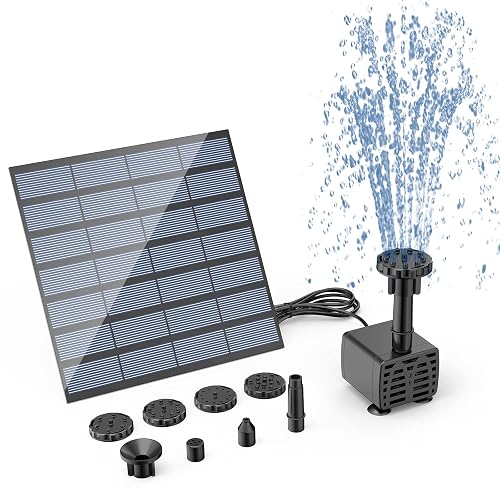
For small garden fountains and ponds, a matched submersible solar kit with its own panel and controller keeps sizing simple.
- Submersible solar fountain pump kit: a self-contained option where the pump and panel are designed to work together. View on Amazon
- Solar pump controller with low-voltage cutoff: helpful for protecting a DC pump when sunlight is weak. View on Amazon
FAQ
Can a solar water pump run at night?
Not directly. Without a battery or a storage tank, a solar pump stops when the panel stops producing power. A battery or elevated storage tank lets you use water after dark.
Do I need a battery for a solar water pump?
Not always. Direct-drive systems pumping into a tank often work without one. A battery is useful if you need steady pressure or pumping during cloudy periods.
What size panel do I need for a water pump?
Start with the pump’s rated wattage, then divide by your local peak sun hours and add margin. Always follow the panel size the manufacturer specifies for that pump.
Related reading
- Solar Water Heater Pumps and Controllers: How Active Systems Run
- Submersible Solar Water Pump for Fountain: 5 Best Picks Compared (2026)
Ready to choose one?
About Ethan Brooks
Ethan Brooks is part of our editorial team and reviews and edits our solar water systems guides, checking product details against manufacturer specifications and owner feedback.