By Miles Fisher
Updated November 2026
Direct-circulation solar pool heating sends your pool water straight through solar collectors, heats it with sunlight, and returns it to the pool in a single pass. By the end of this guide you will understand how the system moves water, how to estimate the collector area and flow rate you need, and how to plan the plumbing so your pump can keep up. The method is simple, inexpensive to run, and well suited to most residential pools, but it depends heavily on getting the hydraulics right.
How Direct-Circulation Solar Pool Heating Works
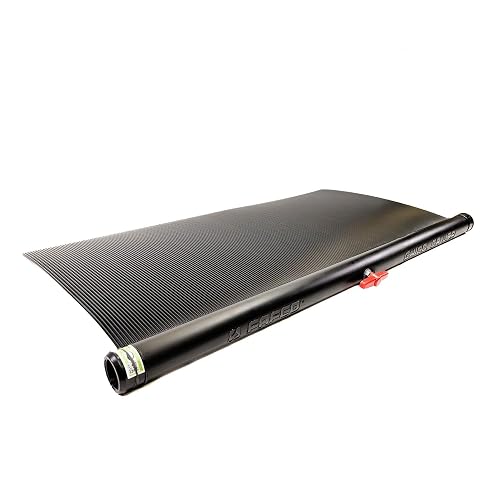
In a direct-circulation system, the filter pump pulls water from the pool, pushes it through the filter, and then routes it to the solar collectors on the roof or ground. The water flows through the collector tubes or mats, picks up heat from the sun, and returns to the pool through a return line. There is no heat exchanger and no separate loop of antifreeze, which is why these systems are often called open-loop. The pool itself acts as the storage tank, so the heat accumulates over the day and the water temperature rises gradually.
Shopping for one? See our guide: 8 Best Solar Water Pool Heater Options for Every Pool Size in 2026.
Because the pool water is the working fluid, every component that touches it must tolerate chlorine, salt or other sanitizers. Collector materials are typically UV-stabilized polypropylene or EPDM rubber, and both are designed for pool chemistry. Manufacturers generally specify that these collectors are for pool water only, not potable water.
Step 1: Estimate Your Collector Area
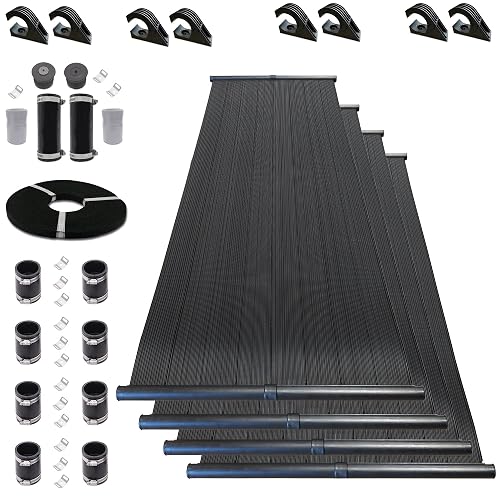
Collector sizing is the first decision that determines performance. A common rule of thumb is that the collector area should be roughly 50 to 100 percent of the pool surface area, with the exact figure depending on your climate, how many months you want to heat, and how warm you want the water. Pools in cooler regions or those you want to extend into shoulder seasons generally need more collector area than pools in hot, sunny locations. For a deeper look, DIY Solar Heating Swimming Pools: Build a Pool Heater in 6 Steps covers this in detail.
Manufacturers publish sizing charts that combine pool area, desired temperature rise and local climate. Use those charts as your starting point rather than relying on a single rule of thumb. For a deeper look at the arithmetic, see Solar Pool Heater Sizing Calculator: How Many Panels Do You Need?.
Step 2: Calculate Flow Rate and Pump Capacity
Flow rate is the variable most often overlooked. Collectors perform best when water moves through them at a rate that gives adequate heat transfer without excessive pressure drop. Manufacturers typically specify a flow range per square meter or per panel, and the total flow must match what your pump can deliver against the system’s resistance.
Work through these numbers before buying anything:
- Total collector area in square feet or square meters
- Manufacturer’s recommended flow per panel or per square meter
- Filter pump rated flow in gallons per minute (GPM) at your actual head
- Whether a dedicated booster pump is needed
Many standard single-speed pool pumps are sized for filtration, not for pushing water up to a roof. If your pump cannot achieve the required GPM at the total head, you will need either a variable-speed pump set to a higher solar speed or a separate solar circulation pump. Owners often report that the most common performance problem is simply insufficient flow, not insufficient collector area.
Step 3: Account for Head Height and Friction Loss
Head height is the vertical distance the pump must lift water from the pool to the top of the collectors. Total dynamic head combines that static lift with friction loss in pipes, fittings, valves and the collectors themselves. Every extra elbow, check valve or long run of small-diameter pipe adds resistance, and resistance reduces flow.
| Factor | What to Check | Why It Matters |
|---|---|---|
| Static head | Vertical rise from pool water level to top of collectors | Sets the baseline lift the pump must overcome |
| Pipe diameter | Use the size the manufacturer recommends, often 1.5 to 2 inches | Smaller pipe increases friction and cuts flow |
| Fittings and valves | Count elbows, tees, unions and check valves | Each adds equivalent length of pipe to the friction calculation |
| Pump curve | Compare GPM at your calculated total head | Confirms the pump can deliver the target flow |
Keep runs short and direct, use gentle sweeps instead of tight elbows where you can, and avoid undersized reducers. When in doubt, have a pump supplier or licensed installer review the head calculation against the pump’s published curve.
Step 4: Plan the Plumbing and Controls
A typical direct-circulation layout includes a diverter valve, a check valve, a vacuum breaker or air-relief arrangement, and a temperature sensor. The diverter valve sends water to the collectors only when the roof is warmer than the pool, which prevents heat from leaving the pool at night. Automatic controllers handle this decision and can also run the pump during the warmest hours.
Freeze protection matters in colder climates. Because the water is open to the atmosphere in the collectors, systems usually rely on drain-down valves or a controller that runs the pump during freezing conditions. Some owners in cold regions choose to drain collectors manually for the winter season. For more on the air-break component, see What Is a Solar Pool Heater Vacuum Breaker and Why Does It Matter?.
Step 5: Install, Test and Balance the System
- Confirm collector placement: face the array as close to true south in the Northern Hemisphere as the roof allows, and keep it free of shading.
- Mount collectors according to the manufacturer’s slope and fastener instructions, leaving room for thermal expansion.
- Run supply and return lines with the correct slope so the collectors can drain completely when the pump stops.
- Install the diverter, check valve, vacuum breaker and sensor, then connect the controller.
- Start the pump, bleed air from the collectors, and watch the flow at the return. Adjust valves until the flow matches the target GPM.
- Monitor pool temperature over several sunny days and fine-tune run hours.
Electrical work and any connection to your main pool plumbing should be handled by a licensed professional in most jurisdictions.
Recommended gear
A few supplies make installation and balancing easier. A variable-speed pool pump lets you run a low speed for filtration and a higher solar speed for collector flow, which is useful when head height is significant. View on Amazon
A pool-rated flow meter lets you confirm GPM directly at the collector inlet rather than guessing from pump curves. View on Amazon
An automatic diverter valve with a temperature sensor prevents reverse heat loss at night and reduces manual switching. View on Amazon
Common Mistakes
- Undersizing the pump. A pump that cannot reach the target flow at total head will starve the collectors and waste the array.
- Ignoring friction loss. Long runs of small pipe and multiple tight elbows can cut flow by a large margin.
- Skipping the vacuum breaker or air relief. Trapped air can stop flow and damage the pump.
- Running the system at night. Without a diverter or controller, warm pool water can drain heat back out through the collectors.
- Poor drainage slope. Collectors that cannot drain fully are at risk of freeze damage in cold weather.
- Mounting facing the wrong direction or in partial shade, which lowers output substantially.
Tips for Better Performance
- Use a cover on the pool overnight and whenever it is not in use. Covers reduce evaporative heat loss more than almost anything else.
- Run the solar circulation during the warmest part of the day, usually late morning through mid-afternoon.
- Check flow at the start of each season, since debris and air pockets can reduce it over time.
- Compare your results with the Solar Pool Heating: How It Works and What to Plan guide to see whether your system is performing as expected.
FAQ
How much collector area do I need for direct-circulation solar pool heating?
A common starting point is 50 to 100 percent of the pool surface area, adjusted for climate and the temperature rise you want. Manufacturer sizing charts give more precise guidance.
Can a standard pool pump run a direct-circulation system?
Sometimes, but only if it can deliver the required flow against your total head. Many single-speed filter pumps cannot, so check the pump curve first.
Why does head height matter so much?
The pump must lift water to the top of the collectors and overcome friction in pipes and fittings. More head means less flow, and flow drives heat transfer.
Does direct-circulation solar pool heating work in cold climates?
It can extend the swimming season, but freeze protection is essential. Drain-down valves, automatic controllers or manual winterization are the usual approaches.
Is a vacuum breaker required?
Most systems need some form of air relief or vacuum breaker to prevent siphoning and trapped air. Follow the manufacturer’s requirements and your local code.
How do I know if the system is working well?
Measure the temperature at the pool inlet and return on a sunny day with the solar circulation running. A consistent rise of several degrees, combined with adequate flow at the collectors, indicates good performance.
Should I hire a professional installer?
Many homeowners handle mechanical parts themselves, but electrical connections and hydraulic calculations are best left to a licensed professional, especially for larger arrays.
Conclusion
Direct-circulation solar pool heating is a straightforward way to warm a pool using the pool itself as storage. Success depends on matching collector area to your pool, verifying that your pump can deliver the target flow at your actual head height, and keeping friction loss low. Plan the hydraulics first, then the collectors, and your system will be far more likely to deliver the warmth you expect.
Ready to choose one?

About Miles Fisher
Miles focuses on practical advice for solar water systems: what matters before you buy, what to skip, and how to get more out of what you already own.