By Ethan Brooks
Updated November 2026
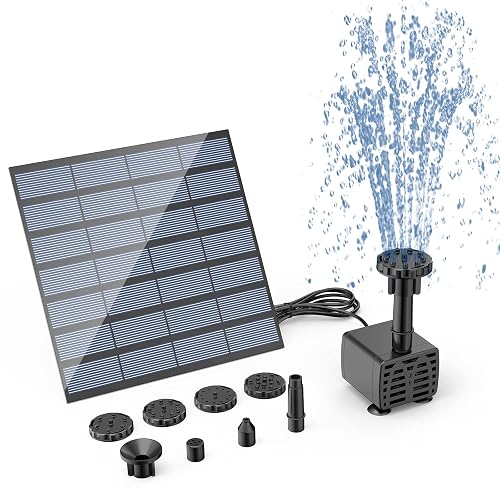
A solar powered water pump works by converting sunlight into electricity with photovoltaic (PV) panels, then using that electricity to drive a motor that moves water from a source to where you need it. Most units are sized by flow rate and head height, and the amount of water they deliver depends mainly on how much sun hits the panels at any given moment.
Why the Pump Moves Water
The PV panels produce direct current (DC) when light strikes the cells. That DC power feeds a controller, which regulates voltage and current and sends the right amount of power to the motor. The motor turns an impeller inside the pump housing, pushing water through the outlet. Many systems skip a battery entirely, so the pump only runs while the sun is strong enough to produce usable power. Others include a battery to keep water moving on cloudy days or after dark.
Shopping for one? See our guide: Solar Powered Water Pump for Small Fountain: 7 Best Picks Compared (2026).
The Factors That Set Your Output
Three numbers determine how well a system performs: flow rate, head height and solar input. Flow rate is the volume of water delivered per minute or hour, usually given in gallons per minute (GPM) or liters per minute. Head height is the vertical distance the pump must lift water, plus any friction loss in the pipe. Solar input is the wattage the panels can deliver, which drops with shade, dust, haze and the angle of the panels to the sun.
As a rough guide, flow falls as head rises. A pump rated at a certain GPM at 10 feet of head will deliver noticeably less at 30 feet. Always check the manufacturer’s performance curve, which shows flow at different heads, rather than relying on the maximum flow figure on the box.
Sizing and Setup Tips
- Measure total head: the vertical lift from the water surface to the outlet, plus roughly 1 foot of equivalent loss for every 10 feet of pipe on a typical small-diameter run.
- Decide how many gallons per day you need, then check that the pump’s flow at your total head meets that target during the hours of good sun.
- Match the panel wattage to the pump’s rated input. Manufacturers often specify a panel size range, so stay within it.
- Face panels toward the equator (south in the Northern Hemisphere) and tilt them near your latitude for the most output.
- Keep panels clean and clear of shade from trees or structures, especially during mid-morning and mid-afternoon.
- Use a pipe diameter that does not choke flow; a narrow line can cut output significantly over long runs.
What We’d Use
For a small garden fountain or pond, a submersible solar pump kit that includes its own panel and controller keeps the setup simple. Look for a model whose performance chart covers your head height. View on Amazon
For a livestock trough or off-grid garden, a solar pump with a built-in controller and a separate panel gives you room to add wattage later. View on Amazon
For more on sizing, see Solar Water Pumps Explained: How PV Pumping Systems Work and Fountain Pump Solar Powered: How to Size, Set Up and Maintain One. If you are heating water rather than moving it, How Does a Solar Water Heater Work? A Homeowner’s Explanation covers that process.
FAQ
Does a solar water pump work on cloudy days?
It works at reduced output. Output scales with light intensity, so flow drops on overcast days. A battery or a larger panel array can smooth this out, but a direct-drive system will slow or stop when light is weak.
How do I know what size pump I need?
Start with your daily water volume and total head height. Then check the manufacturer’s flow chart to confirm the pump meets that volume at your head during peak sun hours. If your application involves drinking water or livestock health, consult a qualified installer or water professional.
Can a solar pump run at night?
Only if it has a battery. Without one, the pump stops when the panels stop producing usable power at dusk.
Related reading
Ready to choose one?
About Ethan Brooks
Ethan Brooks is part of our editorial team and reviews and edits our solar water systems guides, checking product details against manufacturer specifications and owner feedback.