By Ethan Brooks
Updated November 2026
A pump for solar hot water usually fails to move fluid for one of three reasons: the controller isn’t seeing enough temperature difference, the pump can’t overcome the head height and piping resistance, or there is air or debris in the loop. Start by checking the controller, then measure flow, then bleed the system.
Why a Solar Hot Water Pump Stops Working
In an active solar hot water system, the pump circulates a heat-transfer fluid (usually water or a glycol mix) between the collector and the storage tank. The controller turns the pump on when the collector is noticeably hotter than the tank, typically a difference of about 10°F to 20°F depending on the controller setting. If that difference never develops, the pump stays off, even though the pump itself is fine.
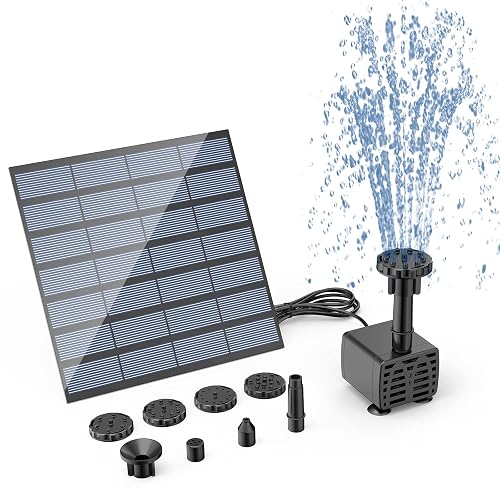
Shopping for one? See our guide: 5 Best Solar Water Pumps for Small Fountain Picks Compared (2026).
Mechanical faults are the next most common cause. A seized rotor, a blown fuse, or a failed capacitor will stop a circulator dead. Pumps that run but move little water often have a flow problem rather than a motor problem.
Factors That Affect Flow: Head Height, Piping and Air
Every pump has a performance curve that shows flow in gallons per minute at a given head. Head is the total resistance the pump must overcome: vertical lift from the bottom of the loop to the roof, plus friction loss through pipe, fittings and the collector. A roof-mounted collector 30 feet above the tank adds roughly 13 psi of static head before friction is counted. If your pump’s curve shows low flow at that height, the pump is undersized or the piping is too narrow.
Air is the other common culprit. Trapped air in the collector or high points of the loop blocks flow and can cause the pump to run dry or overheat. Listen for gurgling, and check that the expansion tank is correctly charged and that air vents are working.
How to Diagnose and Fix It
- Confirm the controller is powered and set to the correct differential. Check the collector and tank sensors for correct placement and wiring.
- Verify the pump receives voltage. With power on and the controller calling for heat, feel the pump housing; a warm motor with no rotation suggests a seized impeller.
- Bleed the loop at all high points until no air comes out, and re-pressurize to the level the manufacturer specifies.
- Check the strainer or filter for debris. Clean it and confirm valves are fully open.
- Compare measured flow with the pump’s rated flow at your actual head. If it falls well short, consider a larger pump or wider pipe.
- If wiring or electrical testing is involved, consult a licensed electrician or solar installer before proceeding.
What we’d use
For a replacement circulator sized for a closed-loop solar thermal system, look at a stainless or bronze wet-rotor model rated for glycol. View on Amazon
For a low-head, low-flow loop such as a small preheat tank, a compact inline circulator can be enough. View on Amazon
FAQ
Can a solar hot water pump run on solar power directly?
Some systems use a PV-direct pump that runs off a small panel, but most active solar hot water loops use a standard AC or DC circulator controlled by a differential thermostat. Check your system design before modifying it.
How do I know if my pump is too small?
Measure flow at the return line or compare the pump’s performance curve with your total head. If flow is well below the rated value at your height and pipe length, the pump is likely undersized.
Why does my pump turn on and off repeatedly?
Rapid cycling usually means the sensor differential is too tight, a sensor is poorly seated, or the loop has air. Adjust the controller setting and bleed the system; if the problem continues, have a professional check the controls.
Related reading
- Top 7 Solar Power Water Pumps for Fountain Picks Compared in 2026
- Submersible Solar Water Pump for Fountain: 5 Best Picks Compared (2026)
- Solar Water Pumps Explained: How PV Pumping Systems Work
Ready to choose one?
About Ethan Brooks
Ethan Brooks is part of our editorial team and reviews and edits our solar water systems guides, checking product details against manufacturer specifications and owner feedback.