 By Ethan Brooks
Updated November 2026
A solar powered water booster pump raises pressure in a home, shower or irrigation line, but the right model depends on flow rate, head height and how much power your panel can supply. Most of the picks below are AC or DC booster pumps that pair with a solar setup, so we compared them on GPM ratings, maximum head, pressure output and how they handle low-flow starts. Use the list as a shortlist, then check your own numbers before buying.
Our top picks at a glance
- 1
 TOP CHOICEBest overallSwimming Pool Pump 48V 3/4HP Powerful Solar Water Pump with MPPT ContrView on Amazon
- 2
 TOP CHOICEBest for quiet home pressureWater Pressure Booster Pump, Automatic On/Off Quiet Boost Pump, VariabView on Amazon
- 3
 TOP CHOICEBest for shower pressureSmart Shower Water Pressure Booster Pump, 9.2GPM, 26.1 PSI, 85W Energy-Saving Booster PumpView on Amazon
- 4
 Best for irrigation and marine useECO-WORTHY 33-Series Industrial Water Pressure Pump 110V AC 4.0GPM 50PSIView on Amazon
- 5
 Best for low-flow startsCrestWave Automatic Water Pressure Booster Pump, 85W Max, 25.6PSI, 550GPHView on Amazon
- 6
 Best for high head and high flow1.6HP Water Pressure Booster Pump, 110V Stainless Steel Automatic PumpView on Amazon
Our Top Picks
Quick Comparison
| Product | Best for | Key feature |
|---|---|---|
| Swimming Pool Pump 48V 3/4HP Solar Water Pump | Off-grid solar setups | MPPT controller included |
| Water Pressure Booster Pump (6.6–9.3 GPM) | Quiet home pressure | Variable speed, auto on/off |
| Smart Shower Water Pressure Booster Pump | Shower pressure | Manual and auto switch |
| ECO-WORTHY 33-Series Water Pressure Pump | Irrigation and marine | Garden hose adapters |
| CrestWave Automatic Water Pressure Booster Pump | Low-flow starting | Zero-pressure intelligent start |
| 1.6HP Water Pressure Booster Pump | High head applications | 140 ft max head |
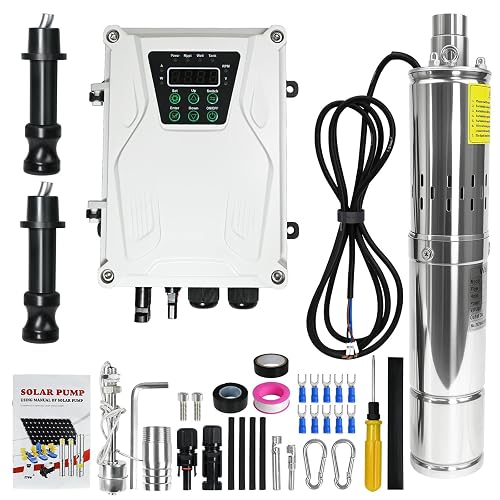
Swimming Pool Pump 48V 3/4HP Powerful Solar Water Pump with MPPT Controller, Suitable for Salt Water, JP17-15/500
Swimming Pool Pump 48V 3/4HP Powerful Solar Water Pump with MPPT Controller,Suitable for Salt Water, JP17-15/500
Best for: Off-grid solar setups that need a DC pump matched to panel output.
This suits owners building a dedicated solar loop who want the controller and pump to work together.
Pros
- MPPT controller helps extract more power from panels in partial sun.
- Listed as suitable for salt water.
Cons
- Panel array must be sized to the 48V input, which adds planning work.
Water Pressure Booster Pump, Automatic On/Off Quiet Boost Pump, Variable Speed Constant Pressure Smart Pumps
Water Pressure Booster Pump, Automatic On/Off Quiet Boost Pump, Variable Speed Constant Pressure Smart Pumps, 6.6 GPM / 7.9 GPM / 9.3 GPM, DN15/4 inch for House, Shower (US)
Best for: Quiet home pressure with steady output.
Homeowners who want constant pressure at taps and showers without a loud cycling motor will find this layout appealing.
Pros
- Variable speed holds pressure as demand changes.
- Offers 6.6, 7.9 and 9.3 GPM ratings.
Cons
- Requires a stable AC supply, so it needs an inverter for solar-only use.
Smart Shower Water Pressure Booster Pump, 9.2GPM, 26.1 PSI, 85W Energy-Saving Booster Pump
Smart Shower Water Pressure Booster Pump, 9.2GPM, 26.1 PSI, 85W Energy-Saving Booster Pump for Home, 1/2 NPT Interface Water Pressure Booster, Manual and automatic dual switch, Steady flow, Low Noise
Best for: Shower pressure in a small home.
A fit for households with weak shower flow at the top floor or on a low-pressure line.
Pros
- Rated 26.1 PSI with 9.2 GPM flow.
- Dual manual and automatic switch.
Cons
- Best limited to indoor plumbing, not large irrigation runs.
ECO-WORTHY 33-Series Industrial Water Pressure Pump 110V AC 4.0GPM 50PSI
ECO-WORTHY 33-Series Industrial Water Pressure Pump 110V AC 4.0GPM 50PSI RV Fresh Water Diaphragm Pump include Garden Hose Adapters for Irrigation Marine Boat Sprinkler Faucet
Best for: Irrigation, sprinklers and marine or RV water systems.
Gardeners and boat owners who need a diaphragm pump with hose fittings will find this practical.
Pros
- Includes garden hose adapters.
- Rated 50 PSI for sprinkler work.
Cons
- 110V AC input means an inverter is needed on a pure solar system.
CrestWave Automatic Water Pressure Booster Pump, 85W Max, 25.6PSI, 550GPH
Zero-Pressure Intelligent Start, Variable Speed, 3 Mode, Solve low-Flow Starting Issue, Output DC24V Safe Voltage CrestWave Automatic Water Pressure Booster Pump, 85W Max, 25.6PSI, 550GPH
Best for: Low-flow starting problems and DC-powered boosting.
Owners whose pump struggles to start at low taps may benefit from its intelligent start logic.
Pros
- DC24V output suits low-voltage solar wiring.
- Variable speed with three modes.
Cons
- Rated 550 GPH, so it is a lower-flow choice.
Buying Guide
Flow Rate (GPM)
Flow rate, measured in gallons per minute, tells you how much water the pump can move at once. Match the GPM rating to your heaviest simultaneous use, such as a shower running while a faucet is open. A pump with too low a flow rate will leave you with weak water even if the pressure number looks good.
Maximum Head and Pressure Output
Head is the height the pump can lift water, while PSI describes the pressure it delivers at the outlet. Check the maximum head against the height from the pump to your highest fixture, and make sure the PSI rating meets your household needs. Extra head capacity gives you a safety margin for gravity losses in long pipe runs.
Power Source and Solar Compatibility
Confirm whether the pump runs on AC or DC and what voltage it requires. DC models generally pair more easily with a solar array and battery or controller, while AC models usually need an inverter. Compare the wattage against your panel output so the pump has enough power to start and run steadily.
Low-Flow Start and Control Features
Some boosters struggle to start when the water supply is weak, so look for variable speed control, soft start or zero-pressure start functions. Automatic on/off operation, pressure displays and manual switches make daily use easier. These features matter most in homes with fluctuating supply pressure or intermittent solar power.
Intended Use and Water Type
Decide whether the pump is for household plumbing, a shower, irrigation or a pool, since each application has different demands. Pumps rated for fresh water may not be suitable for salt water, and garden or RV models may not handle continuous home pressure. Choosing a pump designed for your specific use will help it last and perform reliably.
FAQ
Can a solar powered water booster pump work during cloudy days?
Output drops when sunlight is limited, so performance on cloudy days will be lower than on sunny ones. Many people pair a solar setup with a battery or a backup AC supply to keep water pressure steady. Checking the panel size against the pump’s wattage will help you plan for these conditions.
How do I know what GPM I need?
Add up the flow rates of the fixtures you would use at the same time, such as a shower and a kitchen faucet. Choose a pump whose GPM rating meets or slightly exceeds that total. Undersizing the flow will result in weak pressure during peak use.
Do I need a pressure tank with a booster pump?
Many automatic booster systems work without a separate tank, but some setups benefit from one to reduce cycling. Your plumbing layout and the pump’s control features will determine whether a tank is needed. Reviewing the manufacturer’s installation guidance will clarify the requirement.
Is a booster pump safe for salt water or pool use?
Only pumps specifically rated for salt water should be used with salt water, since standard materials can corrode. Always confirm the material and water-type compatibility listed by the manufacturer before installing. Using the wrong pump type can lead to damage and unsafe conditions.
Can I install a booster pump myself?
Basic installation is possible for handy homeowners, but electrical connections and plumbing changes should follow local codes. A licensed electrician or plumber can confirm the wiring and pipe connections are safe. Professional help is worth considering if your system involves solar wiring or main water lines.
Conclusion
For a solar-focused setup, the DC-based solar pool pump and the variable speed and automatic models suit homeowners who want flexible, energy-conscious operation. Those needing a quieter, shower-focused boost may prefer the smart shower booster or the automatic CrestWave unit.
For higher flow and longer head needs, the 1.6HP stainless steel pump is better suited to whole-home or irrigation use, while the ECO-WORTHY diaphragm model fits RV, marine and garden applications.
Related reading
- Why Does My Solar Powered Hot Water Pump Stop Working? Causes and Fixes
- Top 5 Solar Powered Water Pumps for Cattle Options Compared (2026)
- Top 4 Solar Powered Water Pumps with Timer Options Compared for Gardens
- Solar Powered Water Well Pump Systems: A Step-by-Step Guide (2026)
- Solar Powered Water Pump for Small Fountain: 7 Best Picks Compared (2026)
About Ethan Brooks
Ethan Brooks is part of our editorial team and reviews and edits our solar water systems guides, checking product details against manufacturer specifications and owner feedback.