By Ethan Brooks
Updated November 2026
A solar pool water heater cost depends mostly on three things: the collector area you need, the type of collector you choose, and whether you install it yourself or hire a contractor. This guide walks through how to estimate the cost for your own pool, which factors push the number up or down, and where buyers commonly underestimate what they will spend. Because this is a water-first site, we’ll start with the hydraulic and sizing inputs, since those drive both performance and price.
Start With the Pool, Not the Price List
The fastest way to get an accurate solar pool water heater cost estimate is to measure your pool and define your heating goal before you look at any product. A heater sized for a small above-ground pool in a warm climate can cost a fraction of a system needed to hold an inground pool at a comfortable temperature in a cool region. Collector area is the main variable, and everything else in the budget follows from it.
Shopping for one? See our guide: Top 5 Solar Water Pool Heater Options Compared for 2026.
Measure the surface area and volume
Pool heating load is driven by the water surface, since most heat is lost through evaporation and radiation at the surface. Calculate the surface area in square feet (length × width for rectangular pools; π × radius² for round pools). Then estimate volume so you can check how long the pump needs to run to circulate the full water body. A 15-foot round above-ground pool holding roughly 10,000 gallons is a very different load from a 20 × 40 foot inground pool holding 25,000 gallons or more.
Define your target temperature and season
Decide whether you want to extend the swimming season by a few weeks or heat the water well into the cooler months. Solar heating is most effective when the goal is moderate warming, typically a few degrees above ambient on sunny days, rather than a high set point held year-round. Shoulder-season extension needs far less collector area than heating into winter, and that difference shows up directly in cost.
The Main Factors That Move the Price
Several inputs set the final number. Understanding them lets you compare quotes sensibly and spot where a lower or higher total is justified.
| Factor | Effect on cost | What to check |
|---|---|---|
| Collector area | Largest driver; more panels or mats means more cost | Surface area and target temperature rise |
| Collector type | Unglazed polymer mats are the lowest-cost category; glazed collectors cost more | Climate, season length, and wind exposure |
| Plumbing and fittings | Longer runs, extra valves and sensors add materials and labor | Distance from pump to roof or ground array |
| Controls and automation | Automatic diverter valves and temperature sensors add to the total | Whether you need manual or automatic changeover |
| Installation method | DIY lowers labor; professional installation adds labor but may reduce risk | Roof access, electrical work, and local code |
| Mounting and roof work | Roof mounts need brackets, flashing and sometimes structural checks | Roof pitch, material and condition |
Collector type and material
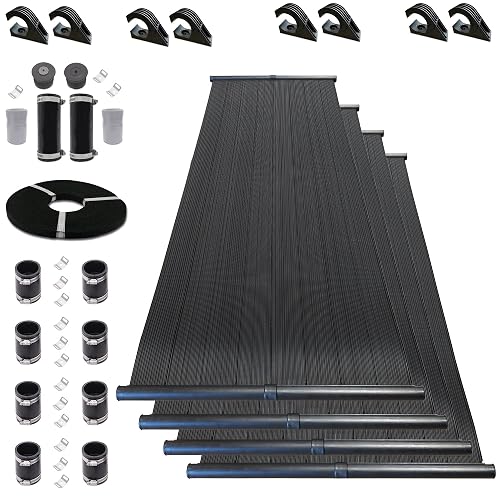
Most residential pool solar systems use unglazed polymer collectors, which are simple black or dark-colored plastic panels with small channels. They have no glass, no frame, and no insulation, so they are the lowest-cost option and work well for pool heating, where the water is the heat sink. Glazed flat-plate collectors and evacuated tubes cost more and are generally designed for domestic hot water, not pool loads. Choosing a more complex collector than the job needs is one of the most common ways to overspend.
Plumbing, pump and controls
Your existing filter pump must move enough water through the collectors. Check the head height from the pump to the top of the collector array; the higher and farther the array, the more head the pump has to overcome, and the more pump capacity or extra plumbing you may need. Pipe diameter matters for flow: undersized lines reduce flow and collector performance. Automatic diverter valves and temperature sensors improve control but add material cost. A simple manual bypass can be a reasonable budget choice if you are willing to switch it by hand.
Installation: DIY versus professional
Ground-mounted arrays next to an above-ground pool are often straightforward to set up with basic tools, a few fittings and a sturdy mounting frame. Roof installations involve more labor, fall risk, and potential structural and flashing concerns. Electrical work for an automatic controller or pump modification should be done by a licensed electrician. If your plan involves roof work or wiring, consult a qualified professional before starting.
How to Build Your Own Estimate
Work through these steps to create a realistic budget before you request quotes or shop for parts.
- Calculate the pool surface area and estimate the volume.
- Decide on a target: season extension, a set temperature rise, or year-round use.
- Select a collector type that fits your climate and goal. Unglazed systems suit most pool applications.
- Estimate collector area using the manufacturer’s sizing guidance for your pool surface and climate zone.
- Measure the distance and height from the pump to the collector location to estimate head and pipe length.
- List every fitting, valve, sensor and mounting part you will need.
- Decide whether you will install it yourself or hire help, and price labor separately if needed.
- Add a contingency for unexpected parts such as adapters, PVC glue, or extra clamps.
Tools and Supplies Checklist
Having the right tools on hand keeps installation time down and avoids leaks. Typical needs include:
- Tape measure and level
- PVC pipe cutter or fine-tooth saw, deburring tool
- PVC primer and solvent cement rated for your pipe type
- Pipe unions, couplings, and appropriate valves
- Pipe clamps, zip ties, and UV-resistant mounting hardware
- Pressure gauge or flow indicator, if your system includes one
- Drill with bits for mounting holes, and sealant rated for outdoor use
Common Mistakes When Budgeting
- Buying collector area based on a rough guess. Oversizing adds cost without much gain, while undersizing leaves you short on heat. Use the surface-area and target-temperature method above.
- Ignoring head height. A high roof mount may need more pump capacity than your existing equipment can deliver.
- Underestimating fittings. Small parts add up quickly, especially with multiple valves and sensors.
- Choosing glazed collectors for pool use. The added cost rarely pays off for pool heating compared with unglazed polymer mats.
- Skipping a vacuum or drain strategy. Without proper relief and drain-down planning, freeze or pressure issues can cause damage that costs far more to repair.
Tips for Keeping the Total Reasonable
- Define the season you actually want to extend. A narrower goal often means a much smaller array.
- Use a manual changeover valve if you are comfortable switching it, and upgrade to automation later.
- Keep plumbing runs short and direct, and use the right pipe diameter.
- Get at least two written quotes that list collector area, fittings and labor separately so you can compare like for like.
- Check local rules on roof-mounted equipment before committing to a layout.
Recommended gear
Some items genuinely help with a solar pool heater install and maintenance. Consider these categories:
- PVC primer and solvent cement for leak-free joints on the plumbing run. View on Amazon
- Pool water temperature thermometer to check the actual temperature rise and confirm your sizing. View on Amazon
- Adjustable pipe clamps for securing lines to frames and posts. View on Amazon
FAQ
What is the typical solar pool water heater cost for a home pool?
There is no single figure, because cost depends on collector area, collector type, plumbing and whether you install it yourself. Measuring your pool and sizing the collector area first gives the most reliable estimate. Manufacturers’ sizing guides and local installers can help you check the numbers.
Is an unglazed or glazed collector better for a pool?
For most pool applications, unglazed polymer collectors are the practical choice. The pool water itself absorbs the heat efficiently, and glazing adds cost without a matching performance gain for this use.
Does pool size affect the cost more than climate?
Both matter. Pool surface area sets the basic load, and climate and season length determine how much collector area you need to reach your target. A small pool in a mild climate can need less area than a larger pool in a cool region.
Can I install a solar pool heater myself?
Ground-mounted systems are often DIY-friendly if you are comfortable with PVC work and basic mounting. Roof installations and electrical controls should be handled by a qualified professional. If you are unsure about structural or electrical work, consult a licensed contractor.
Will a solar pool heater reduce my heating bills?
Solar pool heaters replace or reduce the need for gas or electric heating, so they can lower operating costs. Savings depend on your existing heater, local energy rates and how much sun your site receives. Keep your pump running during sunny hours to get the best results.
How long does a solar pool heater last?
Unglazed polymer collectors are designed for long outdoor service, but UV exposure and freeze events affect lifespan. Manufacturers typically specify warranty terms, so check the documentation for your specific product.
Do I need a vacuum relief or drain valve?
Many systems benefit from a vacuum relief valve to prevent siphoning and a drain-down setup for freezing weather. Check your system’s requirements and local recommendations, and consult a pool professional if you are unsure how to protect the plumbing.
What should I budget beyond the heater itself?
Plan for fittings, valves, sensors, mounting hardware, sealant, and possibly a pump upgrade or electrical work. Adding a contingency of about ten percent for surprises is a common planning habit, and it helps avoid mid-project delays.
Conclusion
A solar pool water heater cost is driven mainly by collector area, collector type, plumbing complexity and installation approach. Measure your pool, define your heating goal, and size the system before comparing quotes. Keep the design simple and compare line items, and you will be in a much better position to choose a system that fits both your pool and your budget.
Related reading
- Top 7 Swimming Pool Solar Water Heater Options Compared (2026)
- Solar Panel Water Heater for Pool: 5 Best Options Compared (2026)
- Solar Hot Water Pool Heater: Sizing, Setup and Common Mistakes
- Solar Dome Above Ground Swimming Pool Water Heater Review: Is It Worth It?
Ready to choose one?
About Ethan Brooks
Ethan Brooks is part of our editorial team and reviews and edits our solar water systems guides, checking product details against manufacturer specifications and owner feedback.