By Ethan Brooks
Updated November 2026
A solar powered pool heater cost depends mostly on three things: the collector area you need for your pool volume, the type of collector you choose, and whether you install it yourself or hire a pro. This guide walks through each factor so you can estimate what you need and plan a realistic budget without guessing. Because the right answer depends on your pool, we focus on the variables that move the number rather than quoting figures that would be out of date by the time you read them.
Start With Your Pool Size and Heating Goal
Before you look at any product, measure your pool. The collector area you need scales with surface area, volume and how many degrees you want to add. Pool heating is usually sized in square feet of collector per square foot of pool surface, and the ratio shifts with climate and season.
Shopping for one? See our guide: 7 Best Solar Powered Pool Water Heater Options Compared (2026).
Use these basic steps to get a working number:
- Measure length and width and calculate surface area in square feet. A 16 by 32 foot rectangle is 512 square feet.
- Decide your target temperature rise, typically 5 to 15 degrees Fahrenheit for a seasonal extension.
- Choose a season. Heating for early spring or late fall needs less collector area than keeping the pool warm through summer nights.
- Check your climate zone. Hot, sunny regions need less collector area than cool, cloudy ones.
As a rough planning rule, many installers start with a collector area equal to 50 to 100 percent of pool surface area for a seasonal extension in a sunny climate. Manufacturers publish their own sizing charts, so always check the specification for your specific product.
The Main Factors That Drive Solar Powered Pool Heater Cost
Once you know roughly how much collector area you need, the next question is what each square foot of that collector costs in your setup. Several factors shape the total.
Collector Type
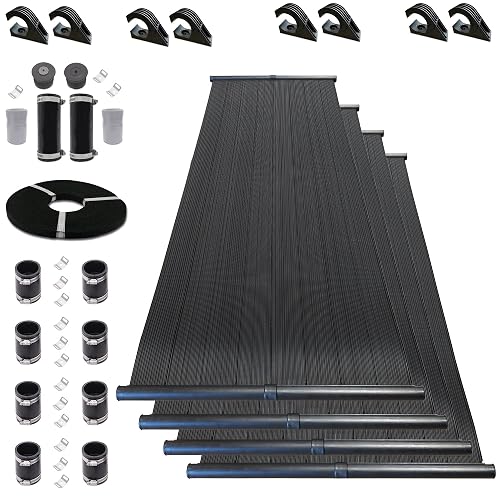
Unglazed polymer collectors are the most common choice for pool heating. They are simple black or dark panels with no glass, no frame and no insulation, which keeps materials and labor low. Glazed flat-plate collectors, which have a glass cover and insulated housing, can heat water more effectively in cool weather, but they cost more per square foot and are usually reserved for hot water systems or extended-season heating. Evacuated tube designs are generally not used for pool heating.
Pump and Controls
Most solar pool heaters rely on your existing filter pump to circulate water through the collectors. If your pump is already rated for the extra head loss of the collector loop, you may not need an upgrade. If it is undersized or old, adding a higher-capacity pump or a variable-speed model can change the total. Automatic diverter valves and temperature sensors also add to the bill, though they make the system more efficient.
Plumbing and Mounting
Roof or ground mounting, pipe runs and the number of penetrations all affect labor and materials. A ground-mounted array close to the pool equipment is usually the simplest. A roof install may need extra mounting hardware and a longer run of pipe. Plan for fittings, unions, check valves and a vacuum relief valve, which protects the system from drawing air when the pump shuts off. The vacuum breaker is not optional on most systems, and skipping it is a common mistake.
Installation Method
Doing the work yourself typically keeps your outlay limited to materials and tools. Hiring a licensed pool contractor adds labor and sometimes a permitting fee, but it may be worth it for complex roof installs or if your local code requires inspection. Check with your municipality about permits before you start.
Sample Budget Breakdown by Category
The table below shows how costs usually divide across a typical project. It is a structural guide, not a price list, so your actual split will depend on your choices.
| Cost Category | What It Covers | What Affects It Most |
|---|---|---|
| Collector panels | The absorber surface sized to your pool | Total square footage and collector type |
| Mounting hardware | Brackets, straps and fasteners | Roof versus ground mount |
| Plumbing | PVC pipe, fittings, unions and valves | Distance from pump to array |
| Controls | Diverter valve, sensors and timer | Automation level |
| Pump upgrade | Higher-flow or variable-speed pump | Existing pump capacity |
| Labor and permits | Installer time and local inspections | DIY versus professional install |
Step-by-Step: How to Plan Your Budget
- Measure your pool and calculate surface area and volume.
- Set your target temperature rise and heating season.
- Choose a collector type that matches your climate and goals.
- Check that your existing pump can handle the added head loss, or budget for an upgrade.
- List all plumbing, valves and mounting parts for your layout.
- Get at least two installer quotes if you are not doing the work yourself, and ask whether they include permits.
- Add a contingency of about 10 to 15 percent for fittings and unexpected pipe runs.
Common Mistakes When Estimating Costs
- Sizing the collector only by pool surface area and ignoring climate and season.
- Forgetting the vacuum breaker and check valves, which are required for safe operation.
- Assuming the existing pump will work without checking its rated head against the collector loop.
- Choosing a glazed collector for pool heating when an unglazed model would meet your needs at lower total cost.
- Overlooking local permit or inspection requirements for roof mounting.
- Leaving out a contingency for extra fittings and pipe.
Tips for Keeping Your Total Reasonable
Stay focused on heating the water you actually use. A pool cover reduces evaporation and heat loss, which can lower the collector area you need. Mounting the array as close to the pump and filter as possible shortens pipe runs. If you already have a capable pump, avoid buying a larger one until you confirm it is necessary. For more detail on sizing and setup, see the related guides below.
Recommended gear
These items help you plan and install a system that matches your budget and pool.
- Vacuum relief valve: Protects the collector loop from drawing air when the pump stops, which is required on most systems. View on Amazon
- Pool water thermometer: Lets you measure actual temperature rise so you can judge whether your collector area is adequate. View on Amazon
- Diverter valve kit: Automatically sends water through the collectors only when they are warmer than the pool, improving efficiency. View on Amazon
- Solar pool cover: Reduces evaporation and heat loss, which can lower the collector area you need. View on Amazon
FAQ
How much collector area do I need for my pool?
Many installers start around 50 to 100 percent of pool surface area for a seasonal extension in a sunny climate, but the right number depends on your target temperature rise and region. Check the manufacturer’s sizing chart for your specific product.
Is an unglazed collector enough for pool heating?
For most pool applications, yes. Unglazed polymer collectors are designed for low-temperature heating and are the standard choice for seasonal pool use. Glazed collectors are more often used for hot water systems.
Do I need a new pump for a solar pool heater?
Not always. Check whether your existing pump can handle the added head loss of the collector loop. If it is undersized, a higher-flow or variable-speed pump may be needed.
Do I need a permit to install a solar pool heater?
Requirements vary by location. Roof installs and electrical controls are more likely to need permits. Check with your local building department before you start.
Can I install a solar pool heater myself?
Many homeowners do ground-mounted installs themselves, since the work is mostly plumbing and mounting. Roof installs, complex plumbing and permitted work are often better left to a licensed professional.
Does a pool cover reduce how much collector I need?
Yes. A cover limits evaporation and heat loss overnight, so the same collector area can maintain a higher temperature. Covers are one of the most effective ways to keep the overall system size manageable.
Why is a vacuum breaker important?
When the pump shuts off, a vacuum relief valve lets air enter the collector loop so water can drain and the panels are not damaged or pulled into a vacuum. It is a standard safety component on most systems.
How long does a solar pool heater last?
Manufacturers commonly specify long service lives for polymer collectors, but actual lifespan depends on UV exposure, water chemistry and maintenance. Check the warranty and specifications for the product you choose.
Conclusion
A solar powered pool heater cost comes down to collector area, collector type, pump capacity, plumbing layout and whether you install it yourself. Measure your pool, set a realistic temperature goal, and check your existing pump before you shop. Get local permit requirements and at least two quotes if you are hiring out the work. For a consultation on safe electrical or roof work, speak with a licensed professional.
Related reading
- Solar Powered Pool Heater DIY: 5 Best Kits Compared (2026)
- Solar Powered In Ground Pool Heater: Steps, Sizing and Setup (2026)
- Pool Heater Solar Powered: A Step-by-Step Guide to Sizing and Setup (2026)
- Floating Solar Powered Pool Heater: Setup, Sizing and Common Mistakes
- 7 Best Solar Powered Swimming Pool Heater Options for 2026
Ready to choose one?
About Ethan Brooks
Ethan Brooks is part of our editorial team and reviews and edits our solar water systems guides, checking product details against manufacturer specifications and owner feedback.