By Miles Fisher
Solar pool heater prices depend on a handful of measurable things: how much water you need to heat, how many square feet of collector that requires, which collector material you choose, and how hard the installation will be. This guide walks through each of those factors so you can estimate what a system will cost for your pool, compare quotes on equal terms, and avoid paying for capacity you do not need. Because the figures depend heavily on region and contractor, treat any general estimate as a starting point and confirm it with local bids.
Start With Your Pool Volume and Heating Goal
Every solar pool heater price starts with the size of the pool. Heating load is driven by water volume, the temperature rise you want, and how much heat the pool loses to the air, wind and evaporation. A pool that is covered most of the time loses far less heat, which means a smaller collector area will do the job.
Shopping for one? See our guide: 6 Best Starlite SLC Solar Collectors (2026): Expert Picks.
Estimate your pool volume
Multiply the surface area in square feet by the average depth in feet, then multiply by 7.5 to get gallons. A 16 by 32 foot pool averaging 5 feet deep holds about 19,200 gallons (512 × 5 × 7.5). Use the average depth, not the deepest point, unless the pool is a uniform depth.
Decide how many degrees you need to gain
Most owners want to extend the swim season by 10 to 20°F rather than reach a specific target temperature. Solar heating works best when the water temperature sits close to the air temperature, because the collectors operate more efficiently at lower temperature differences. Setting realistic expectations here keeps you from oversizing the system.
Note your climate and sun exposure
Collector sizing rules of thumb assume good sun. In a cloudy or northern climate, the same pool may need more collector area, and the extra area raises the price. Shaded roofs or yards with tall trees to the south and west push the required size up further.
How Collector Area Drives the Price
Most solar pool heater prices are set by how many square feet of collector you buy. Collector area is the single largest cost component, and the rough rule is that a fully uncovered pool in a mild climate may need collector area equal to 50 to 100 percent of the pool surface area, while a pool with a solar cover often needs considerably less. Those ratios are common planning figures, not guarantees; your installer should run a heat-loss calculation for your specific site.
Collector material options
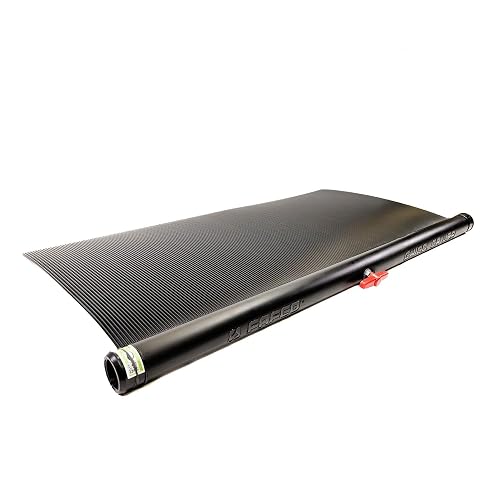
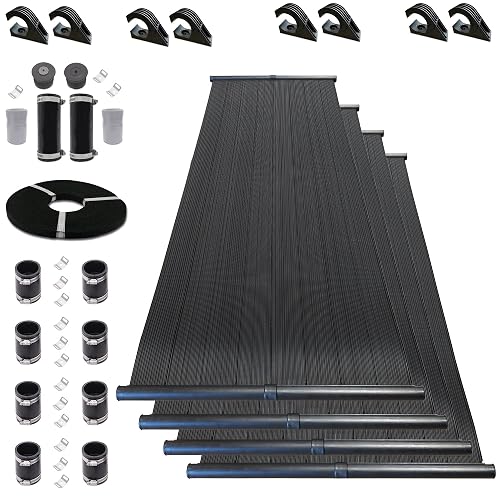
Unglazed polypropylene or EPDM rubber collectors are the most common choice for pools. They are lightweight, do not freeze-proof themselves in a glazed sense but drain down or are used in climates where freezing is rare, and they are the lowest-cost category per square foot. Glazed flat-plate collectors cost more and suit cooler climates or extended seasons. Some manufacturers publish certification data for their collectors, and it is worth comparing rated performance alongside price. Our overview of Best Solar Pool Heating Panels: 5 Certified Collectors Compared covers the certified options in more detail.
Sizing examples
| Pool size (surface area) | Typical situation | Collector area planning range |
|---|---|---|
| Small spa or plunge pool (about 150 sq ft) | Covered most nights | Roughly 50 to 75 sq ft |
| Standard residential pool (about 400 sq ft) | Uncovered, mild climate | Roughly 200 to 400 sq ft |
| Standard residential pool (about 400 sq ft) | Solar cover used nightly | Roughly 100 to 200 sq ft |
| Large pool (about 800 sq ft) | Uncovered, cool climate | Roughly 500 to 800 sq ft |
These ranges are planning figures to help you read a quote, not a substitute for a site assessment. A proposal that calls for far more collector area than these ranges suggest deserves a question about the heat-loss assumptions behind it.
Installation and Site Factors That Change the Total
Two systems with identical collector area can land at very different totals because of how they are mounted and plumbed. The main variables are roof versus ground mounting, roof pitch and condition, distance from the pool equipment pad, and the size of the existing filter pump.
Mounting location
Roof mounting usually requires extra racking, fastening and labor, and some roofs need reinforcement or a new covering before panels go on. Ground mounting on a rack is often simpler, though it uses yard space and may need a permit depending on your area. For guidance on whether a site is suitable, see Is Your Roof or Yard Suitable for a Solar Water Heater?
Plumbing and pump capacity
Pool solar systems run water from the pool through the collectors and back, so the existing pump must handle the added head loss. A longer pipe run, more elbows and a higher roof add friction and lift. If the pump cannot maintain adequate flow through the collectors, the system underperforms, and fixing that may mean a pump upgrade. Our piece on Solar Pool Heating: How It Works and What to Plan explains the flow and plumbing considerations in more depth.
Controls and automation
Many installations include a differential controller with temperature sensors and a motorized diverter or valve. The controller decides when to send water to the collectors (when the panel is warmer than the pool) and when to bypass them. Basic controllers are inexpensive, while systems with remote monitoring or integration into a pool automation system add more.
Step-by-Step: Comparing Quotes on Equal Terms
Quotes for solar pool heating rarely match line for line, so a structured comparison is essential. Follow these steps to make bids comparable.
- Write down your pool dimensions, average depth, cover habits and target temperature gain before contacting installers.
- Ask each installer for their collector area recommendation and the heat-loss assumptions behind it.
- Confirm the collector material, certification status and warranty length for each option.
- Check whether the quote includes the diverter valve, sensors, controller, plumbing, permits and any roof work.
- Ask whether the existing pump was evaluated for flow and head, and whether an upgrade is included or optional.
- Compare the scope of labor, pipe materials and winterization or drain-down provisions.
Checklist for the site visit
- Pool dimensions, depth profile and surface area
- Pool cover type and how often it is used
- Sun exposure and shading from trees or structures
- Roof pitch, orientation, age and load capacity, or yard space for ground mounting
- Distance from the collector site to the pool pump and filter
- Existing pump model and rated flow
- Local permit requirements and any HOA restrictions
Common Mistakes When Budgeting
- Buying on collector area alone. A cheap per-square-foot figure means little if the system needs a pump upgrade and extra plumbing to work.
- Ignoring the cover. A solar cover reduces heat loss sharply and can cut the collector area you need, which often lowers the overall total.
- Oversizing for a higher target. Asking for a 30-degree gain in a cool climate pushes the system toward much larger and more expensive collectors. A realistic goal usually costs less.
- Skipping flow checks. Undersized pumps or long runs leave collectors starved for water, and owners often blame the collectors when the real issue is plumbing.
- Comparing quotes with different scopes. One bid may omit permits, sensors or roof work. Normalize the scope before comparing totals.
Tips for Keeping the Total Under Control
- Install or use a solar cover before buying collectors; it is often the most efficient way to reduce required collector area.
- Choose ground mounting if you have suitable, unshaded yard space.
- Confirm the existing pump can handle the added head before signing.
- Ask about drain-down or winterization if you live where temperatures drop below freezing.
- Get at least three written, itemized proposals that use the same sizing assumptions.
Recommended gear
Gear for this project is mostly about measuring and protecting the pool so you need less collector area in the first place. A solar cover is the most useful add-on, and a few tools make the sizing and flow checks easier.
- Solar pool cover: Reducing nighttime heat loss is the fastest way to shrink the collector area you need. View on Amazon
- Digital pool thermometer: A waterproof thermometer lets you log baseline and post-install temperatures so you can judge real gains. View on Amazon
- Clamp-on flow meter: Checking flow through the pool circuit helps you confirm whether the pump can support a solar loop. View on Amazon
FAQ
What is the average solar pool heater price?
There is no single reliable average because pricing depends on collector area, material, mounting, plumbing and local labor rates. Compare itemized quotes based on the same pool dimensions and heating goal rather than relying on a general figure.
Are unglazed collectors cheaper than glazed ones?
Unglazed collectors are generally the lower-cost option per square foot and are the standard choice for pools. Glazed collectors are more often used in cooler climates or for longer seasons, which is why they tend to cost more.
Does a solar pool cover reduce the system size I need?
Yes. Covering the pool at night and when not in use cuts heat loss substantially, which typically lets you use less collector area. Your installer can model the difference for your site.
Will my existing pool pump work with a solar system?
It may, but you should confirm its flow rate and the total head the system will add. A pump that cannot move enough water through the collectors will reduce heating performance, and an upgrade may be needed.
Can I install a solar pool heater myself?
Simple ground-mounted kits are sometimes installed by owners with plumbing experience. Roof work, electrical connections and permits are better handled by a licensed professional, and an unpermitted or poorly sized system can cause problems later.
How long do solar pool heaters last?
Many manufacturers specify warranties for their collectors, and unglazed polymer collectors are designed for long outdoor service. Actual lifespan depends on UV exposure, water chemistry, freeze events and installation quality, so check the warranty terms before buying.
Does climate affect the price?
Yes. Cooler or cloudier climates usually need more collector area and sometimes glazed collectors, both of which raise the total. Freeze protection requirements can also add components and labor.
Should I consult a professional before buying?
A licensed installer or pool professional should confirm sizing, plumbing and electrical details before you commit, especially for roof-mounted systems or any change to your pool pump circuit. Local building departments can also advise on permit requirements.
Conclusion
Solar pool heater prices are driven mainly by collector area, mounting and plumbing, and the amount of heat the pool loses in your climate. Start by measuring your pool and defining a realistic temperature gain, then compare quotes using the same assumptions. Adding a solar cover and confirming your pump’s flow capacity are two of the most effective ways to keep the total manageable.
Related reading
- Solar Water Heater Cost Factors: What Drives the Price Up or Down
- Where Solar Water Heating Is Used: Homes, Pools and Beyond
- What Affects Solar Water Heater Efficiency and Performance
- Solar Water Heater Troubleshooting: Common Problems and Causes
- Solar Water Heater Storage Tanks: What Homeowners Should Know
- Solar Water Heater Pumps and Controllers: How Active Systems Run
Ready to choose one?

About Miles Fisher
Miles focuses on practical advice for solar water systems: what matters before you buy, what to skip, and how to get more out of what you already own.