 By Ethan Brooks
Updated November 2026
Homeowners researching the average cost to install solar pool heater setups usually want to know one thing first: which kit will actually heat their water without oversizing the system or stressing the pump. This list compares six DIY solar pool heater kits on panel size, mounting approach, freeze resistance and the pool sizes each one suits. The selection criteria are panel area relative to pool volume, header and flow compatibility, mounting method and the lifespan manufacturers specify. A related read: Winterizing Solar Pool Heater: 6 Best Kits and Covers for 2026.
Our top picks at a glance
- 1
 TOP CHOICEBest overallHighest Performing Design – DIY Solar Pool Heater Kit – 15-20 Year LifView on Amazon
- 2
 TOP CHOICEBest for high-wind sitesIndustrial Grade Solar Pool Heater DIY Kit – Superior High-Wind StraplView on Amazon
- 3
 TOP CHOICEBest for roof installsWeatherproof Solar Pool Heating Panel, Portable Efficient Pool WarmerView on Amazon
- 4
 Best for replacement panelsHighest Performing Design – Universal Solar Pool Heater Panel ReplacemView on Amazon
- 5
 Best for fast heatingWiFi Enabled, 15.90 COP, IPX4-Waterproof, Electric Swimming Pool HeatView on Amazon
- 6
 Best for small pools and insulationGoFloats V2 Inflatable Solar Pool Heaters for Affordable Pool HeatingView on Amazon
Our Top Picks
| Product | Best for | Key feature |
|---|---|---|
| Highest Performing Design DIY Kit (4×10) | Most residential pools | 15–20 year lifespan specified |
| Industrial Grade DIY Kit (300 sq ft) | Windy or cold climates | Strapless high-wind mounting |
| IRONMAX 2.5 x 20 Ft Solar Pool Heater | Roof-mounted installs | Weatherproof portable panel |
| Universal Panel Replacement (4×8) | Replacing worn panels | Fits standard 1.5″ headers |
| Beluga B50V TURBRO Heat Pump | Fast heat-up times | WiFi control, 50,000 BTU |
| GoFloats V2 Inflatable Heaters (3 pack) | Small pools and insulation | Inflatable, low-profile design |
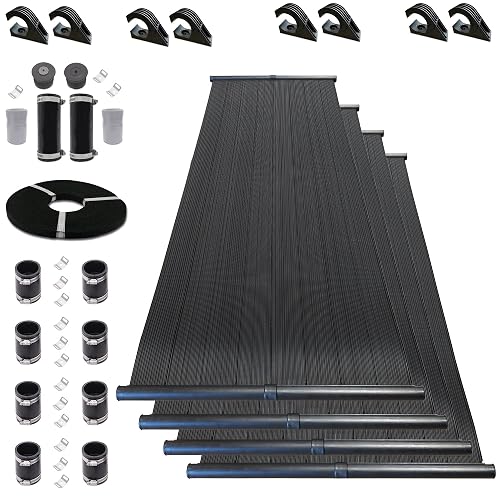
Highest Performing Design – DIY Solar Pool Heater Kit – 15-20 Year Life Expectancy (4-4×10 / 1.5″ I.D. Header)
Highest Performing Design – DIY Solar Pool Heater Kit – 15-20 Year Life Expectancy (4-4×10 / 1.5" I.D. Header)
Best for: Most residential pools that need a balanced panel area
This kit suits homeowners with inground or above-ground pools who want a straightforward DIY build with a header size that matches common plumbing. The 4×10 panel count gives a reasonable collector area for moderate pool volumes.
Pros
- Manufacturer specifies a 15–20 year life expectancy
- 1.5″ I.D. header matches many standard fittings
Cons
- Requires a pump sized to the header flow rate
Industrial Grade Solar Pool Heater DIY Kit – Superior High-Wind Strapless Mounting System & Maximum Freeze Resistance (6-4’x12.5′ / 300 Square Feet)
Industrial Grade Solar Pool Heater DIY Kit – Superior High-Wind Strapless Mounting System & Maximum Freeze Resistance (6-4'x12.5' / 300 Square Feet)
Best for: Windy or cold-climate sites needing a large collector area
Best suited to larger pools or sites where wind loads and freezing are real concerns. The 300 square foot array is the largest collector area in this group, so flow must be matched carefully.
Pros
- Strapless mounting system is designed for high-wind sites
- Large 300 sq ft collector area for heavier heating loads
Cons
- Needs a higher-flow pump and more roof or ground space
Weatherproof Solar Pool Heating Panel IRONMAX 2.5 x 20 Ft Solar Pool Heater for Above Ground & Inground Pools
Weatherproof Solar Pool Heating Panel, Portable Efficient Pool Warmer System, Easy to Install on Outdoor Roofs IRONMAX 2.5 x 20 Ft Solar Pool Heater for Above Ground & Inground Pools
Best for: Roof-mounted installs on above-ground or inground pools
A portable-style panel aimed at owners who want a single long run on an outdoor roof. Check your roof load and mounting points before ordering.
Pros
- Listed as weatherproof for outdoor roof use
- Works with both above-ground and inground pools
Cons
- Long 20 ft run needs careful flow balancing
Highest Performing Design – Universal Solar Pool Heater Panel Replacement – 15-20 Year Life Expectancy (4′ X 8′ / 1.5″ I.D. Header)
Highest Performing Design – Universal Solar Pool Heater Panel Replacement – 15-20 Year Life Expectancy (4' X 8' / 1.5" I.D. Header)
Best for: Replacing worn panels in an existing system
Aimed at owners who already have a working system and need matching collector panels. Confirm header diameter and fitting type before buying.
Pros
- Universal fit for 1.5″ I.D. headers
- Manufacturer specifies a 15–20 year life expectancy
Cons
- Only useful if your existing header dimensions match
WiFi Enabled, 15.90 COP, IPX4-Waterproof, Electric Swimming Pool Heat Pump for in and Above-Ground Pools, Beluga B50V TURBRO 50,000 BTU Inverter Pool Heater, Up to 15,000 Gallons, 220-240 V
WiFi Enabled, 15.90 COP, IPX4-Waterproof, Electric Swimming Pool Heat Pump for in and Above-Ground Pools, Beluga B50V TURBRO 50,000 BTU Inverter Pool Heater, Up to 15,000 Gallons, 220-240 V
Best for: Fast heat-up times and app-based control
This is an electric heat pump rather than a solar collector, included here because it is a common alternative when solar output is limited. It needs a 220–240 V connection.
Pros
- Rated up to 15,000 gallons per the listing
- WiFi control and inverter operation
Cons
- Requires a dedicated 220–240 V electrical circuit
Buying Guide
Panel Area Relative to Pool Volume
Match the collector area to your pool’s size and how much you want to extend the swimming season. A panel array that is too small will barely move the water temperature, while an oversized one can strain your pump and add cost without much benefit. Check each kit’s total square footage against your pool’s gallons before you decide.
Pay attention to whether a kit is sized for a small above-ground pool or a larger inground pool. Matching the kit to your actual water volume is the single most useful step in comparing options.
Header Size and Flow Compatibility
The header is the pipe that distributes water across the panel tubes, and its diameter affects how well your pump can push water through the system. Confirm that the header size works with your existing pool plumbing and filter pump. Mismatched fittings are one of the most common reasons DIY installations underperform.
Mounting Method and Wind Exposure
Think about where the panels will go. Roof-mounted systems depend on the roof’s pitch, orientation and load capacity, while ground or rack mounting offers more flexibility. If your site gets strong winds, look for mounting systems designed to resist uplift, and plan for secure fastening no matter which option you choose.
Freeze Resistance and Climate
If your area sees hard freezes, check how the kit handles winterization. Some designs drain well and resist cracking, while others need to be drained manually before cold weather arrives. Matching the kit to your climate helps protect your investment and extends the usable life of the panels.
Manufacturer Lifespan and Warranty Terms
Compare the lifespan and warranty details each manufacturer states, and read what the warranty actually covers. Panels exposed to chlorinated water, sunlight and temperature swings wear over time, so a longer stated life expectancy can translate into fewer replacements. Always verify the specifics directly with the product listing before you buy.
FAQ
Can I install a solar pool heater myself?
Many homeowners with basic plumbing and roofing skills complete DIY solar pool heater installations successfully. The work typically involves mounting panels, connecting headers and tying the system into your existing pump and filter. If you are uncomfortable with roof work or plumbing modifications, consider hiring a professional for part of the job.
How much heat can a solar pool heater add to my pool?
The temperature gain depends on panel area, sunlight, air temperature, wind and how long your pump runs each day. Solar heaters generally extend the season and raise water temperature modestly rather than providing rapid heating. Adding a pool cover can help retain the warmth the panels collect.
Do I need a pump upgrade for a solar pool heater?
Your existing pump may be sufficient for a smaller kit, but larger panel arrays can require more flow than a standard setup provides. Check the flow requirements in the kit’s specifications and compare them with your pump’s capacity. If the numbers do not line up, a pump upgrade may be necessary.
Should I drain the panels for winter?
In areas with freezing temperatures, draining or properly winterizing the panels is usually recommended to prevent cracking. Some kits are designed to handle freezes better than others, so review the freeze resistance details before deciding. Follow the manufacturer’s winterization instructions closely.
How long do DIY solar pool heater kits typically last?
Lifespan varies by product, climate, water chemistry and maintenance. Several manufacturers list estimated life expectancies in their product details, but actual results depend on how well the system is installed and maintained. Regular inspection for leaks and debris will help you get the most years out of the panels.
Conclusion
Homeowners with a standard backyard pool who want a balanced, well-documented option should consider the Highest Performing Design DIY kit as a starting point. Those with exposed sites, strong winds or larger pools may find the high-wind industrial kit or the larger IRONMAX array a better fit for their conditions.
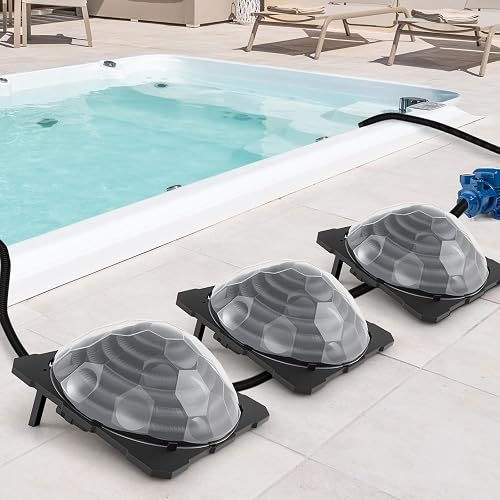
If you want a low-cost way to hold heat rather than generate it, the inflatable insulation option can complement any solar setup. Anyone needing faster, more controllable heating in a shorter season may prefer the heat pump, which runs on electricity rather than sunlight.
Related reading
- Average Cost of Solar Pool Heater: 7 Best Options Compared (2026)
- Solar vs Gas Pool Heater: Which Heats Better and Costs Less to Run
- Solar Swimming Pool Heater Cost: What to Expect and How to Plan
- Solar Powered Pool Heater Cost: What to Expect and How to Budget (2026)
- Solar Power Pool Heater Cost: What You'll Pay and What Drives It
- Solar Pool Water Heater Cost: What You'll Pay and What Changes It
About Ethan Brooks
Ethan Brooks is part of our editorial team and reviews and edits our solar water systems guides, checking product details against manufacturer specifications and owner feedback.