By Ethan Brooks
Updated November 2026
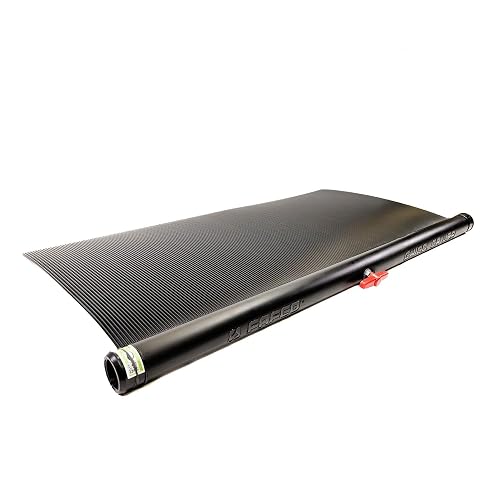
A doheny solar pool heater is a passive solar collector system that uses your pump to move pool water through a set of panels, warming it before it returns to the pool. In this guide you will learn how the system is built, how to estimate the collector area your pool needs, how to plumb the system so flow stays within a safe range, and where installers and owners most often run into trouble. The focus throughout is on water: flow rate, head height and the pump sizing that ties them together.
How a Doheny Solar Pool Heater Works
Solar pool heating is simple in principle. Water is pulled from the pool by the filter pump, routed through the filter, sent to the solar collectors on the roof or ground, heated by sunlight passing through the collector material, and returned to the pool through the return line. Nothing is stored and nothing is burned. The warming only happens while water is moving through the panels and the sun is hitting them.
Because the heating depends entirely on flow, the hydraulic design matters as much as the panel area. Too little flow and the water sits in the collectors long enough to overheat, which can damage the panels and waste energy. Too much flow and the water passes through so quickly that it barely picks up heat. Most manufacturers of this type of system specify a flow window per panel, and that window should guide every decision you make about your pump and piping.
Step 1: Estimate the Collector Area You Need
Sizing is the first and most important job. A common rule of thumb for unglazed polymer collectors is that you need roughly 50 to 100 percent of the pool surface area in collector area, with the exact figure depending on your climate, the target water temperature, and how many hours of sun you get. Pools in cooler, windier regions usually need more collector area than pools in hot, sunny climates. Indoor or heavily shaded pools may not be good candidates at all.
- Measure the surface area of your pool in square feet. For a rectangle, multiply length by width. For a kidney or irregular shape, measure the longest and widest points and estimate conservatively.
- Decide your target water temperature. Many owners aim for a few degrees above their current air temperature during the swim season rather than a fixed number.
- Choose a collector area as a percentage of pool area that fits your climate. Start toward the middle of the range and adjust after you check local sun-hour data.
- Divide the total collector area by the area of one panel to get the panel count. Round up.
For a 400 square foot pool in a moderately sunny region, a collector area of 200 to 400 square feet is a typical starting range. Your panel count follows from the individual panel size listed in the product documentation.
Step 2: Confirm Your Pump Can Deliver the Right Flow
Flow rate is measured in gallons per minute (GPM). Panel manufacturers typically publish a recommended flow for each collector, and the total flow for an array is the per-panel figure multiplied by the number of panels. Your filter pump has to deliver that total flow while also overcoming the resistance of the filter, heater plumbing, valves and the vertical lift to the roof.
That resistance is called head. There are two parts to it. Static head is the vertical distance from the water level to the highest point of the collectors. Friction head is the pressure lost to pipe length, fittings and valves. Add them together and compare the result against your pump’s performance curve at the flow you need. If the pump curve drops below your required flow at that head, the collectors will not get enough water and you will need a larger pump, a booster pump, or a layout with lower head.
Measuring Head Height
Measure from the pool water surface to the highest collector outlet. Each foot of vertical lift adds to the work the pump does. Roof-mounted arrays often have 15 to 25 feet of static head, which is significant. Ground-mounted arrays keep static head low but may require longer pipe runs, which adds friction loss. Plan the route with both in mind.
Checking Pump Compatibility
- Read the pump’s head-versus-flow chart, not just its horsepower rating.
- Find the flow you need at your total head and confirm the pump delivers it.
- Check that the filter is not so restrictive that it cuts flow below the collector minimum.
- Consider a variable-speed pump if your layout is marginal, since it lets you tune flow precisely.
Step 3: Plan the Plumbing Layout
Good plumbing keeps flow even across all panels and keeps air from getting trapped. The usual approach is a supply header at the bottom of the array and a return header at the top, with the panels connected in parallel between them. Parallel connections keep the pressure drop low and make the flow distribution more even than a long serial run.
Your system should include a few components that protect the equipment and the people using the pool:
- A check valve or backflow prevention device to stop water draining back into the pump when it shuts off.
- Air relief or vacuum relief valves at the high point of the array so the collectors drain properly.
- A diverter valve so you can send water to the solar system or bypass it.
- Unions and isolation valves for future service.
Keep all piping sloped toward a drain point so the collectors can empty in freezing weather. Use UV-resistant pipe and fittings where they are exposed to sun.
Step 4: Install the Controls
A temperature sensor on the collector outlet and another on the pool water allow an automatic controller to run the pump only when the collectors are hotter than the pool. This prevents the system from pulling heat back out of the pool on cloudy days or at night. Many owners add a timer as a backup, but a differential controller is the better control method because it responds to actual conditions.
Common Mistakes
- Undersizing the pump. Owners often reuse an old pump that cannot deliver the total collector flow against the roof head. Check the curve before you buy.
- Ignoring head height. A roof array that looks fine on paper can starve for flow once friction and static lift are added.
- Skipping vacuum relief. Without a relief device, the pump can pull a vacuum and cavitate when the system shuts down.
- Running the system at night. Without a differential controller, the pump can cool the pool.
- Poor air purging. Trapped air reduces flow and can cause false readings on the sensors. Install air relief at the top of the array.
- Undersizing collector area for the climate. A pool that is comfortable in July may still be cold in May without enough collector area.
Tips for Better Performance
- Cover the pool at night to hold heat. A solar cover can noticeably reduce overnight heat loss.
- Keep the collectors free of debris and leaves so sunlight reaches the surface.
- Check that flow is even across all panels by feeling the temperature of each panel’s outlet during operation.
- Review your flow rate after any filter cleaning or pump change.
- Winterize the system in regions where freezing is possible by draining the collectors completely.
Recommended gear
A differential temperature controller is one of the most useful add-ons for any solar pool heating setup because it runs the pump only when the collectors can add heat. Pick a model that accepts two sensors and has a freeze-protection mode if your area sees frost.
A variable-speed pool pump helps when the head is marginal, because you can dial in the exact GPM the collectors need instead of accepting whatever a fixed-speed pump delivers. Look for one with a published head-versus-flow chart. View on Amazon
Air relief valves installed at the high point of the array prevent trapped air from blocking flow. Choose a model rated for your system’s operating pressure and temperature. View on Amazon
A solar pool cover reduces nighttime heat loss and can shorten the time your collectors need to reach target temperature. View on Amazon
Where to Learn More
If you are still deciding on overall system design, start with the sizing and layout articles on this site. The guide to Solar Pool Heater Sizing: How Many Panels Does Your Pool Need? walks through the area calculation in more detail, and Solar Pool Heater Plumbing Diagram: Step-by-Step Layout for Beginners covers header placement and fittings. If you want to understand the role of pressure relief in your piping, What Is a Solar Pool Heater Vacuum Breaker and Why Does It Matter? explains how that device protects your pump. For comparisons of complete systems, Top 5 Solar Water Pool Heater Options Compareds for 2026 is a useful place to see how different designs handle flow and head. Owners with an inground pool may also find Solar Powered In Ground Pool Heater: Steps, Sizing and Setup (2026) helpful for a parallel walkthrough.
FAQ
How much collector area does a doheny solar pool heater need?
A common starting range is 50 to 100 percent of your pool surface area, adjusted for climate and the temperature you want to reach. Cooler or shaded locations usually need the higher end.
What flow rate should the system run at?
Use the flow specified by the collector manufacturer, multiplied by the number of panels. Your pump must deliver that flow at your total head, which is the sum of static lift and friction loss.
Why does head height matter so much?
Every foot of vertical lift and every foot of pipe and fitting adds resistance. If the total head pushes the pump below the required flow, the collectors will not get enough water and performance will drop.
Can I run the pump at night?
You generally should not. At night the collectors are cooler than the pool, so pumping through them pulls heat out. A differential controller prevents this automatically.
Do I need a vacuum breaker?
In most systems, yes. A vacuum relief device protects against cavitation and draining problems when the pump shuts off. Check your manufacturer’s requirements.
How do I winterize the system?
In freezing regions, drain the collectors completely, open any drain valves, and blow out remaining water if your design allows. Some systems use automatic freeze protection instead.
Should I consult a professional?
Yes, especially for roof-mounted arrays, electrical connections for controllers and pumps, and any structural work. A licensed installer can verify head calculations and roof load.
Conclusion
A well-designed doheny solar pool heater depends on getting three numbers right: collector area for your pool and climate, total flow for your panels, and the head your pump must overcome. Measure carefully, check your pump’s performance curve, and plumb the system with air relief and proper controls. Get those basics right and the sun will do most of the heating work for you.
Ready to choose one?
About Ethan Brooks
Ethan Brooks is part of our editorial team and reviews and edits our solar water systems guides, checking product details against manufacturer specifications and owner feedback.